Valle de la Luna
Valle de la Luna
Located 13 km from San Pedro de Atacama, Valle de la Luna brings together dunes, salt caves and rock formations in the mineral landscape of the Atacama Desert.
Valle de la Luna stretches approximately 13 km from San Pedro de Atacama, in the Atacama Desert. This mineral site, shaped by salt, wind and rare rainfall, is part of the Cordillera de la Sal and reaches an average altitude of 2,264 m. Its relief of crests, dunes and salt cavities makes it one of the most popular excursions departing from the village.
Why visit Valle de la Luna
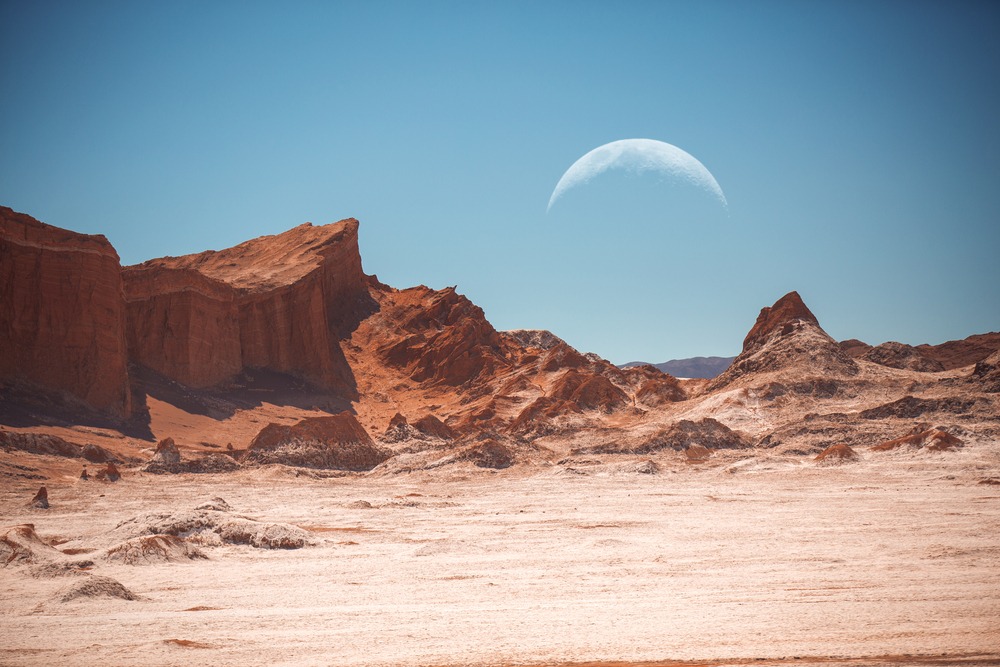
The valley concentrates remarkable geological diversity within a few kilometers: salt tunnels, high dunes, quartz formations and former mining sites. The contrast between soil whitened by crystals, ochre walls and the dry blue sky creates highly photogenic landscapes, particularly in the late afternoon. Unlike other Atacama sites, access remains straightforward: the area can be visited in a few hours by car, bike or with a guide from San Pedro.
Geological history
Several million years ago, a vast lake occupied this portion of the desert. Tectonic movements lifted its bed, exposing to the open air the salt and sediment layers it contained. This mineral mass, which became the Cordillera de la Sal, was subsequently sculpted by wind erosion and rare precipitation. Valle de la Luna corresponds to a section of this chain, where erosion has carved particularly sharp reliefs.
Belgian archaeologist Gustavo Le Paige, who worked extensively in the region, is associated with the development of several local sites, including the famous Tres Marías de Quartz. In the 20th century, the area also experienced salt extraction activity, with the ruins of the Victoria Mine remaining as testament.
What to see in the valley
The Salt Cave
This complex of tunnels and narrow gorges cuts through the salt rock. The route alternates between low passages, steep trails and constricted corridors. It concretely illustrates the work of water and wind on salt over millennia. People with claustrophobia or those traveling with young children should avoid this section.
The Great Dune
The Great Dune offers an overview of the natural amphitheater and surrounding crests. A path climbs to its summit. From there, two options: follow the precipice that overlooks the valley or descend toward the Achache viewpoint through the ravine. This is one of the most frequented spots at sunset.
The Three Marías de Quartz
These three natural formations, blending salt, clay and quartz, were identified by Gustavo Le Paige. They stand at the roadside and lend their name to a quiet sector of the valley, where the ground features crystallized salt deposits in places on its surface.
The Victoria Salt Mine
In the 20th century, several families lived from salt extraction in this part of the Atacama. The Victoria Mine preserves the vestiges of these installations: stone walls, extraction structures, access paths. A marked trail connects the former work sites and allows you to understand how this now-vanished activity was organized.
Practical information
Entry to the valley is through a welcome kiosk where admission fees are paid. The rate is moderate, with reductions for children, students and seniors. On site, you will find restroom facilities and a small café area. Visitors are required to stay on marked roads and trails, and to park in designated areas to preserve the fragile desert soil.
Allow two to four hours to explore the main points of interest. Bring water, a hat, sun protection and sturdy shoes for sections of the Salt Cave. As the valley sits above 2,200 m, acclimatization time in San Pedro is recommended before your visit.
When to go
The most favorable season runs from October to December, with generally clear skies and bearable daytime temperatures. The majority of visitors arrive in the late afternoon for sunset, which colors the walls in orange then purple hues. To avoid crowds, dawn is a good alternative, with equally interesting light at a low angle. Nights are cool throughout the year.
How to get there
The valley is reached from San Pedro de Atacama, approximately 13 km west of the village. Three options are available:
- Guided tour: many local agencies offer late afternoon excursions with transport and a guide.
- Car rental: the road is paved to the entrance, then unpaved within the valley.
- Bike: the distance remains accessible to experienced cyclists. Leave early and bring plenty of water, as there is no shade on the route.
Access is allowed during the day, with a final entry in mid-afternoon. Check current opening hours with San Pedro's tourism office before your visit.
What to see nearby
Valle de la Luna combines easily with other sites in the region:
- Salar de Atacama: Chile's largest salt flat, approximately an hour to the south, with its lagoons and flamingo colonies.
- Geysers del Tatio: high-altitude geothermal field, best visited at dawn.
- San Pedro de Atacama: adobe village serving as a logistical base for all desert excursions.
Frequently asked questions
Frequently asked questions
Allow between 2 and 4 hours to explore the main sites (Salt Cave, Great Dune, Tres Marías, Victoria Mine). A half-day is sufficient for most visitors.
Sunset is the most popular time, with beautiful colors playing across the walls. Dawn offers comparable lighting with far fewer people on the trails.
Yes, independent visits are possible by car or bike from San Pedro de Atacama. The trails are marked. A guide remains useful for geological and historical explanations.
The valley sits at approximately 2,264 m, which remains moderate. One or two days of acclimatization in San Pedro is generally sufficient to avoid altitude-related discomfort.
October, November and December offer the most stable conditions: clear skies, mild daytime temperatures, minimal risk of precipitation.
Prepare your trip
Valle de la Luna naturally fits into an itinerary in northern Chili, around San Pedro and the Atacama Desert. To build an itinerary tailored to your interests, consult our suggestions for travel to Chili.
Interested in this visit?
We can include it in your personalised itinerary.