San Cristóbal Hill in Santiago
San Cristóbal Hill in Santiago
Rising 860 meters in the heart of Santiago, San Cristóbal Hill offers sweeping views of the Andes, a Marian shrine, a zoo and hiking trails, within Chile's largest urban park.
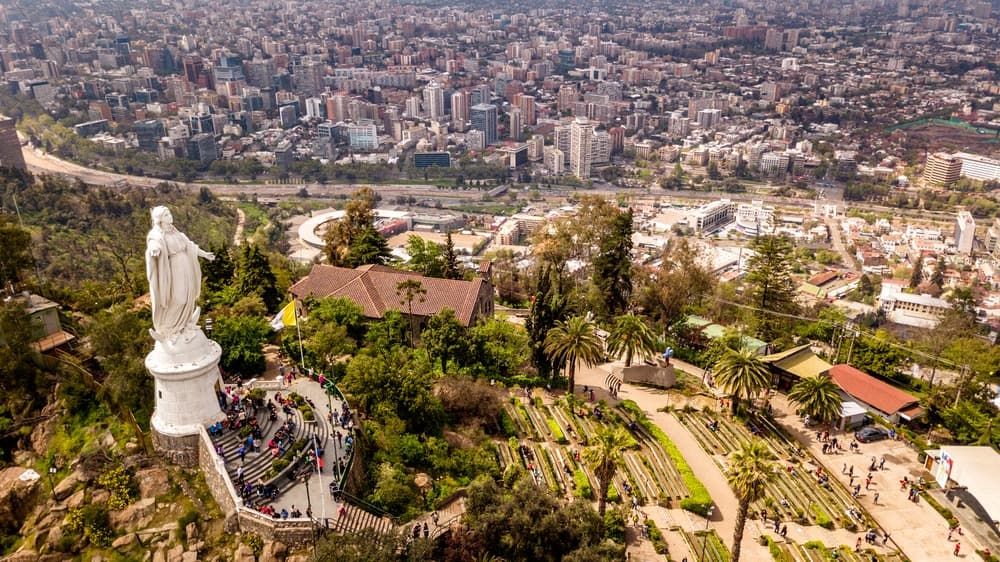
Dominated by a white statue of the Virgin Mary visible from far away, San Cristóbal Hill (Cerro San Cristóbal) peaks at 860 meters in the heart of Santiago. With its 722 hectares, it forms the main component of Parque Metropolitano, the largest green urban space in the Chilean capital.
Why climb San Cristóbal Hill
Three reasons inspire the ascent. First, the panorama: on clear days, you take in the entire urban fabric of Santiago all the way to the snow-capped peaks of the Andes cordillera to the east. Next, the symbolic dimension: the Marian shrine at the summit remains an active pilgrimage site, while the Manuel Foster Observatory speaks to the site's scientific history. Finally, the recreational appeal: a zoo, swimming pools, hiking trails and cycling paths make the hill a true urban leisure park, accessible from downtown.
The contrast with the noise and density of the city center strikes you immediately once you step onto the shaded paths. The area sees strong weekend crowds, quieter during the week.
History of San Cristóbal Hill
The summit originally bore the Mapuche name Tupahue, meaning "divine mountain." Spanish conquistadors renamed it San Cristóbal, after the patron saint of travelers.
The site took on a scientific vocation in 1903 with the creation of the Manuel Foster Observatory, Chile's first permanent astronomical observatory, installed near the summit. In the early 20th century, the statue of the Virgin was erected at the highest point: 14 meters tall set on an 8-meter base, for a total of 22 meters. A chapel was built at its feet.
In April 1987, Pope John Paul II visited the site during his apostolic visit to Chili and celebrated a papal mass, an event that strengthened the site's pilgrimage dimension.
What to see and do
The Marian shrine and summit
The Basilica of the Immaculate Conception at the summit welcomes both visitors and pilgrims. The terrace surrounding the statue offers 360° views over the city. It's also the best vantage point to understand Santiago's geography, stretched between the cordillera and the coastal range.
The metropolitan zoo
The Santiago Zoo, located on the southern flank of the hill, houses some 158 species. The collection emphasizes South American wildlife: llamas, vicuñas, guanacos, condors, and the pudu, the world's smallest cervid, endemic to the temperate forests of southern Chili. Plan on one to two hours for your visit.
Sports and family activities
- Hiking and running: several marked trails connect the base to the summit, including the classic route from Pío Nono (approximately 45 minutes uphill on foot).
- Cycling: the paved road is popular with cyclists, especially in the morning.
- Swimming: the Tupahue and Antilén municipal pools are open during the summer season.
- With family: the Parque Bicentenario de la Infancia, on the Recoleta slope, offers slides, water play and a small funicular for children.
Practical information
Access to the hill is free. The funicular, cable car, zoo and pools are paid, at moderate rates. Bring water, a hat and sunscreen: shade is scarce once you leave the wooded areas, and Santiago's dry air amplifies the sun's effect.
Plan for half a day for a comfortable visit including the ascent, the summit and a complementary site (zoo or pool). A full day if you combine multiple activities.
When to visit
The hill is worth visiting year-round. Southern spring (September to November) and autumn (March to May) offer the most pleasant conditions, with moderate temperatures and lighting ideal for panoramic views. Summer (December to February) can be hot and the air polluted: prefer the morning. Winter (June to August) is cool but often clear after rains, making the cordillera particularly visible.
How to get there
The hill is integrated into the city, just a short distance from downtown. Several options:
- Funicular: the departure station is at the north end of Pío Nono street, in the Bellavista neighborhood. Journey of approximately 10 minutes to the summit.
- Cable car: reopened in 2016 after several years of closure, it connects the Oasis sector (Providencia side) to the summit.
- On foot or by bike: from Bellavista, approximately 45 minutes uphill via the road or trails.
- Metro: Baquedano station (lines 1 and 5), about 10 minutes on foot from the Bellavista entrance.
Nearby attractions
The hill integrates easily into a day exploring downtown Santiago:
- La Chascona, one of Pablo Neruda's residences, in Bellavista, at the foot of the hill.
- The National Museum of Fine Arts, in Forestal Park.
- The Gabriela Mistral Cultural Center (GAM), dedicated to performing arts and exhibitions.
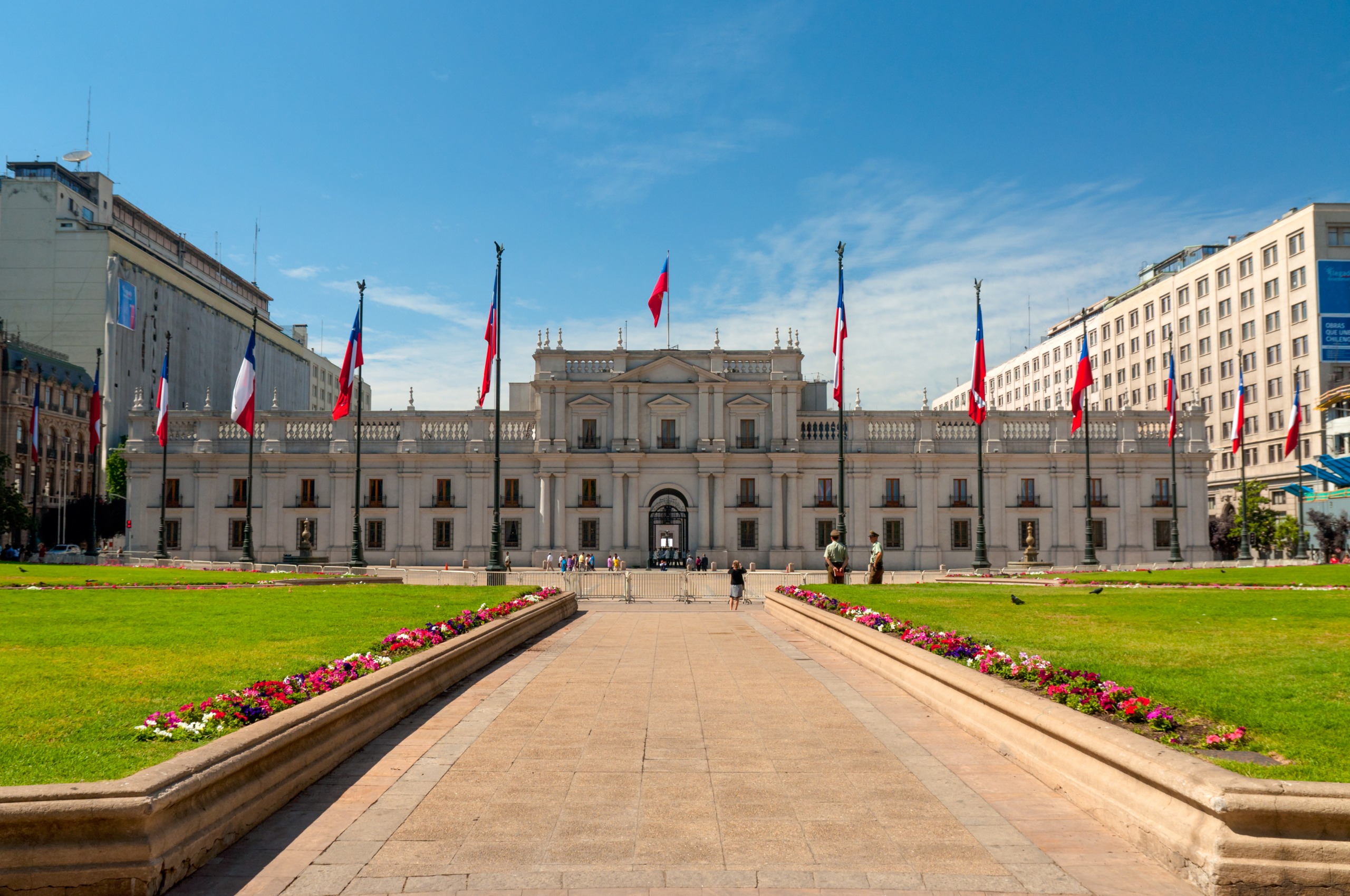
- La Moneda Palace, seat of the Chilean presidency.
Frequently asked questions
Frequently asked questions
Plan your trip to Chili
San Cristóbal Hill is a natural stop for anyone beginning their stay in Santiago. To extend the experience toward the country's iconic landscapes, explore our itineraries and circuit ideas on our Chili travel page.
Interested in this visit?
We can include it in your personalised itinerary.