Geysers del Tatio
Geysers del Tatio
The Southern Hemisphere's largest geyser field, El Tatio awakens at dawn at 4,200 m altitude, 80 km from San Pedro de Atacama.
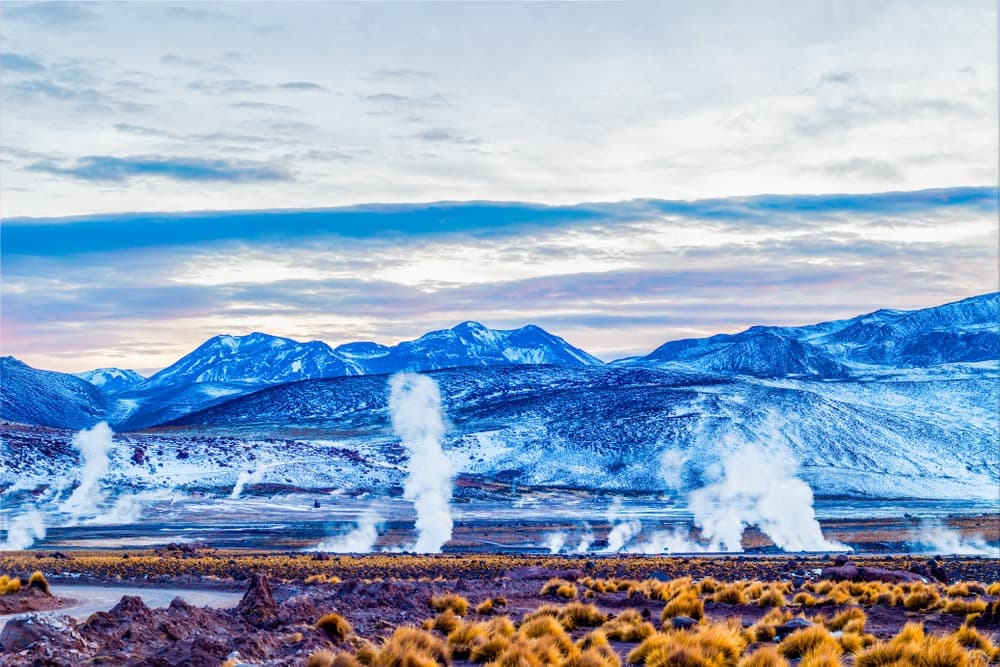
At the foot of the Tatio and Linzor volcanoes, in the Antofagasta region, the Geysers del Tatio form the largest geothermal field in the Southern Hemisphere. At over 4,200 meters altitude, nearly 80 active geysers awaken at dawn in an arid volcanic landscape, 80 km from San Pedro de Atacama.
Why visit the Geysers del Tatio
El Tatio brings together approximately 80 active geysers over an area of around 30 km², making it the largest geyser field in the Southern Hemisphere. The site represents nearly 8% of the geysers recorded on the planet and holds, tied with Sol de Mañana in neighboring Bolivia, the title of the world's highest geyser site.
The interest of the place lies in a very specific phenomenon: between 6 and 7 in the morning, the thermal gap between the glacial air and underground water triggers maximum fumarole activity. Columns of vapor then rise several meters high, accompanied by the characteristic hissing of the vents. Once the sun rises, the thermal contrast decreases and visible activity drops noticeably.
History and etymology
The name Tatio derives from kunza, the language of the Atacameños. Ethnologists still debate its translation: for some it means "oven" or "to show," for others "grandfather." No interpretation has reached consensus.
Geothermal exploration of the site began in 1920, motivated by the energy potential of this zone with very high surface temperatures. Several drilling campaigns were conducted throughout the 20th century, but industrial exploitation was abandoned due to the ecological sensitivity of the field and tourism pressure. The site is today managed through co-management with local Atacameño communities.
What to see and do on site
The geyser field at dawn
Arrival occurs before sunrise to take advantage of the window of maximum activity. Marked trails allow circulation between the vents, essential to avoid areas where fragile mineral crust covers pockets of boiling water. The sculptures of sulfur and carbonates that form around the vent openings reveal themselves as you walk.
The thermal springs
A developed basin allows bathing in hot water, usually after passing through the geyser area, when the outside temperature rises. Plan for swimwear, towel and easy-to-put-on shoes.
High-altitude fauna and flora
- Andean flamingos: recognizable by their blackish tail feathers. Young chicks are born gray and their plumage gradually turns pink with the consumption of algae rich in carotenoid pigments.
- Vicuñas: wild camelids smaller than llamas, observable in high-altitude pastures.
- Rheas and Andean foxes: present throughout the surrounding altiplano.
- Yaretas and cacti: flora is limited to a few species adapted to extreme dryness and cold.
Practical information
The site is managed and access is granted against a modest entry fee, collected upon arrival. Plan for 2 to 3 hours on site to experience both the geyser zone and thermal springs.
Recommended equipment: down jacket or warm vest (temperatures frequently below freezing in early morning), hat, gloves, sunglasses, high-protection sunscreen, closed-toe shoes and at least 1.5 liters of water per person.
Altitude and safety
At 4,200 meters, acute mountain sickness may occur (headaches, nausea, shortness of breath). It is recommended to spend at least two to three days in San Pedro de Atacama (2,400 m) before heading to El Tatio to promote acclimatization. Avoid alcohol the night before, hydrate abundantly and don't push your pace on site. People with heart or respiratory conditions should consult a doctor before departure.
When to go
The site is accessible year-round. The dry season (April to November) offers the most stable conditions, with clear skies that favor observation at sunrise. Nights are particularly cold then, down to -10°C or less in June-July. The summer rainy season (January-February, called "Bolivian winter") can lead to temporary road closures after heavy rainfall.
How to get there
El Tatio is located 80 km north of San Pedro de Atacama, approximately 2 hours by road. Two main options:
- Organized excursion: the most common option. Departure around 4 am from San Pedro to arrive at dawn. Most local agencies offer this tour with transport, breakfast and English-speaking guide included.
- Rental vehicle: a 4x4 is recommended. The road is partly unpaved, sometimes snow-covered or icy in early morning. Night driving at altitude requires caution; ensure you depart with a full tank, water and a charged phone.
Nearby
On the return, the village of Machuca is worth a stop. This pastoral community lives primarily from llama and alpaca herding. Residents sell empanadas and llama skewers there. Further south, the Los Flamencos National Reserve encompasses the Atacama Salt Flat, 30 km from San Pedro, with the Cejar, Tebenquiche and Ojos del Salar lagoons. To extend the high-altitude geothermal experience, Lauca National Park in the north of the country offers comparable surroundings.
Frequently asked questions
Frequently asked questions
Fumarole activity is maximum between 6 and 7 in the morning, when the thermal gap is greatest. Most excursions depart San Pedro de Atacama around 4 am to arrive before sunrise.
Yes. At 4,200 meters, symptoms can appear even in healthy individuals. A minimum acclimatization of two to three days in San Pedro (2,400 m) is advised before the ascent.
Yes, a thermal spring basin is set up for bathing. Plan for swimwear, towel and something to change into quickly, as the ambient air remains cool even during the day.
Yes, with a rental vehicle (4x4 recommended). The road is not entirely paved and can be icy at dawn. Many travelers prefer the organized excursion for logistics and safety reasons.
The dry season, April to November, offers the most stable conditions. The Southern Hemisphere winter months (June-August) are the coldest but also the clearest.
Planning your trip
The Geysers del Tatio fit naturally into a stay around San Pedro de Atacama, the starting point for most excursions in northern Chili. To build a complete itinerary including the altiplano, desert and Andean volcanoes, consult our trips to Chili.
Interested in this visit?
We can include it in your personalised itinerary.