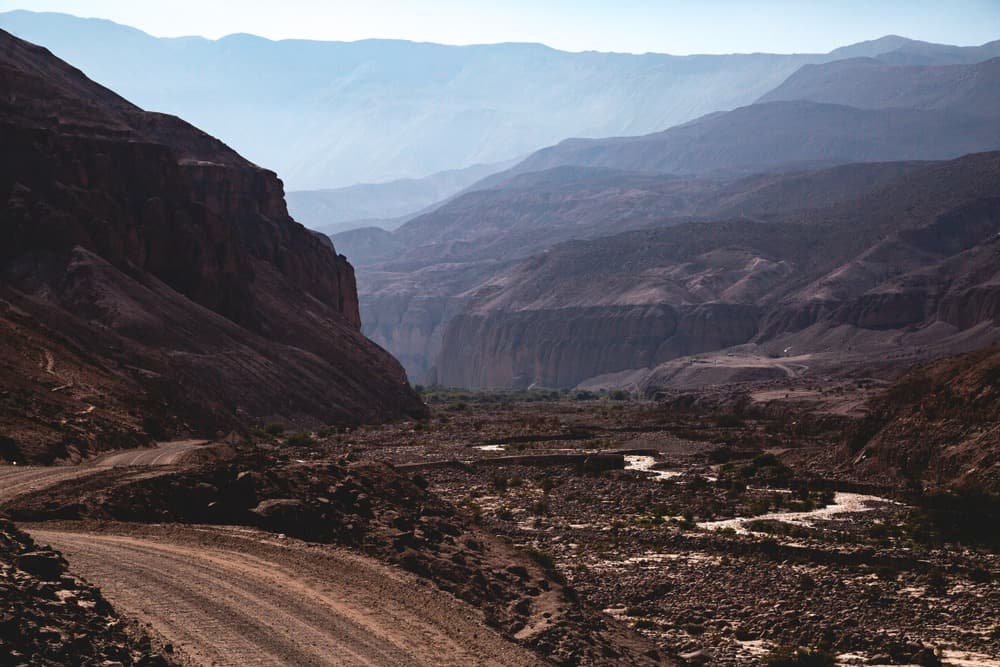
Azapa Valley
Azapa Valley
Located 13 km from Arica, Azapa Valley combines Chinchorro mummies, pre-Hispanic geoglyphs and olive plantations in the heart of northern Chili's desert.
Just 13 km from downtown Arica, Azapa Valley unfolds its olive and fruit plantations across one of the planet's most arid deserts. This green corridor, inhabited for nearly 9,000 years, preserves traces of one of the oldest known funerary cultures: the Chinchorros, whose mummies predate those of ancient Egypt by two millennia.
Why visit Azapa Valley
Azapa Valley combines three rarely found attractions on a single site: exceptional archaeological heritage from the Chinchorros, pre-Hispanic geoglyphs visible on hillsides, and agricultural production renowned throughout Chili (olive oil, tropical fruits, vegetables).
For travelers arriving from Arica or heading toward the altiplano, it's a short yet rich stop, accessible in half a day, that illuminates the long human presence in this desert strip of northern Chili.
History: the Valley of the Chinchorros
Human occupation of the valley dates back approximately 7,000 years before our era. The first inhabitants, the Chinchorros, were a people of fishermen settled along the Pacific coast. Shells and cactus fragments found at their sites testify to their fishing techniques, with cactus notably used as bait.
Later, through contact with Andean tribes from the Altiplano, they developed subsistence agriculture in fertile valleys like Azapa. Yet it was their funerary tradition that made them famous: the Chinchorros practiced artificial mummification, treating and reconstructing the bodies of the deceased. The oldest mummies discovered are today considered to predate Egyptian mummies by approximately 2,000 years, making them, according to current research, the oldest prepared mummies in the world.
What to see and do
San Miguel de Azapa Archaeological Museum
Affiliated with the University of Tarapacá, the San Miguel de Azapa Museum houses a collection estimated at approximately 20,000 pieces. The tour is organized into three sections:
- the terrestrial and marine ecosystem of northern Chili;
- the agricultural and artisanal traditions of Andean peoples;
- funerary practices, with several Chinchorro mummies on display alongside tools, ornaments and everyday objects placed with the deceased.
Allow 1 to 2 hours for a thorough visit. The explanations largely focus on body preparation techniques, which involved the removal of internal organs and complex reconstruction work.
Geoglyphs and Cerro Sagrado
On hillsides, figures painted in red ochre stand out against the mineral ground: human silhouettes, alpacas, llamas, monitor lizards, serpents. These geoglyphs likely served multiple purposes—territorial markers, route guides for caravans, and ritual signs. Cerro Sagrado, the sacred hill, concentrates a large number of these representations. The paintings known as Azapa and Atoka are among the most expressive. Binoculars are useful for discerning details.
Hiking, biking and horseback riding
The valley is suited for walking, mountain biking or horseback riding. The slopes are moderate and trails traverse olive, banana and guava plantations. Several producers sell their fruits, juices and olive oils directly roadside. The valley is renowned throughout the country for the quality of its olive oil.
Terminal Agropecuario
On the way back to Arica, the Terminal Agropecuario, a major food market in the city, naturally extends the visit: it features the valley's produce alongside that from the neighboring altiplano.
Practical information
The visit can be done in half a day from Arica. Bring water, a hat and sun protection: the sun is intense even when temperatures remain mild. Admission to the San Miguel Museum is charged at a reasonable rate.
When to go
The climate is desert-like, rainfall is very rare, and the valley can be visited year-round. Temperatures typically range between 13°C and 27°C depending on the season and time of day. Mornings and late afternoons are most pleasant for walking and observing geoglyphs, whose relief is enhanced in low-angle light.
How to get there
Azapa Valley is located 13 km from downtown Arica and approximately 300 km northwest of Iquique. Several options from Arica:
- Collectivo: shared taxis departing from downtown, the most economical option. They circulate to the museum and main points in the valley, provided you wait for the vehicle to fill.
- Private taxi: more comfortable and faster, at a notably higher but negotiable rate for round-trip with waiting time.
- Car rental: practical if you combine Azapa with Lluta Valley or Putre, further inland.
Nearby attractions
- Lluta Valley: another fertile valley north of Arica, known for its candelabra cacti and its own geoglyphs.
- Pucará de Copaquilla: ruined pre-Incan fortress dating from the 12th century, on the route leading toward Putre and Lauca Park.
- Arica: the city itself, its port, its metal cathedral designed by Eiffel and its waterfront deserve a full day.
Frequently asked questions
Frequently asked questions
Plan your trip
Azapa Valley naturally fits into an itinerary in northern Chili, between Arica, the altiplano and the Atacama Desert. To build a customized journey incorporating this site and other stages of northern Chili, consult our trips to Chili.

Interested in this visit?
We can include it in your personalised itinerary.