Cape Horn National Park
Cape Horn National Park
At the southern tip of Chili, Cape Horn National Park protects a subantarctic archipelago steeped in maritime history and remarkable marine wildlife.
Cape Horn National Park marks the southernmost tip of South America, where the waters of the Pacific and Atlantic oceans converge. Designated as a UNESCO Biosphere Reserve, this 630 km² territory constitutes the planet's most southern park. It can be visited from Puerto Williams, Chili's southernmost city.
Why Visit Cape Horn National Park
- Reach one of the world's most legendary maritime promontories, nicknamed the "Cape of Storms."
- Observe subantarctic wildlife: albatrosses, Magellanic penguins, southern right whales, elephant seals, dolphins, and otters.
- Explore a rare ecosystem, home to over 300 species of liverworts and 400 species of mosses.
- Pay respects at the Albatross Monument, a memorial dedicated to lost sailors.
- Complete a Patagonian itinerary after crossing the Beagle Channel.
History of Cape Horn
Dutch navigator Jacob Le Maire was the first to round the promontory in 1616. He named it after the Dutch city of Hoorn, which gave rise to the Spanish variant Cabo de Hornos and the English Cape Horn. Several celebrated explorers documented this remote region, among them Charles Darwin, Roald Amundsen, and Ernest Shackleton.
For centuries, Cape Horn served as a landmark for all vessels traveling between the Atlantic and Pacific, until the opening of the Panama Canal in 1914. Official protection of the site came later: in 1945, the Chilian Government decided to protect this area to preserve its biodiversity. The zone was subsequently designated a UNESCO Biosphere Reserve.
What to See in the Park
An Archipelagic Landscape
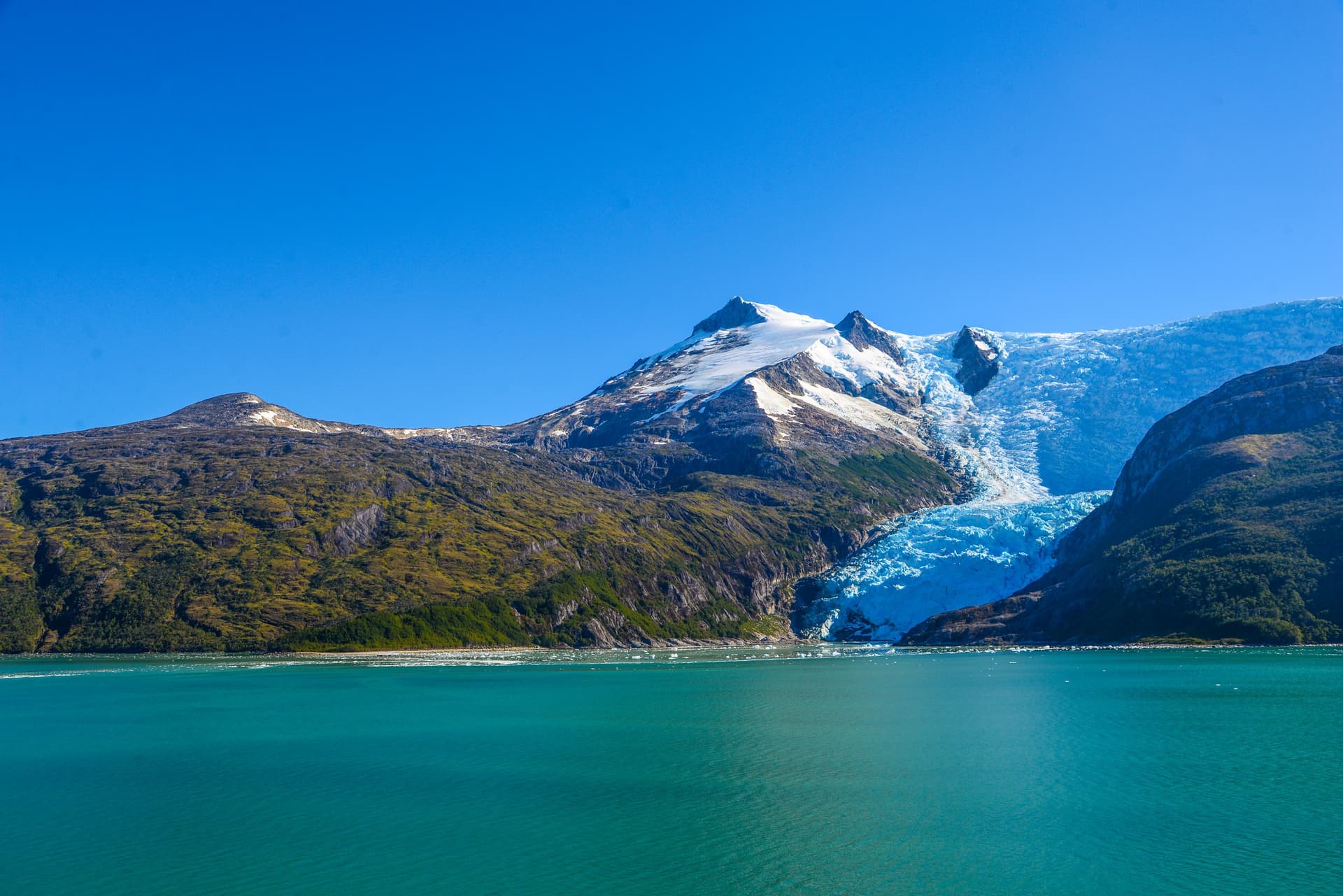
The park covers 630 km² and has an average elevation of 220 m. Two peaks dominate it: Cerro Pirámide (406 m) and Cerro Hyde (670 m). The reserve encompasses a vast archipelago of islands and islets, the largest being the Wollaston and Hermite islands. Cape Horn itself is located on Hornos Island, at the southern tip of this ensemble.
Subantarctic Forests and Marine Wildlife
The park's forests are home to canelos, coigües, and ñires—tree species adapted to the region's powerful winds. The islands, particularly Cape Horn, are covered with extensive peatlands where over 300 species of liverworts and 400 species of mosses thrive, making it a reference site for bryologists.
The park's emblematic animal is the albatross, which can have a wingspan exceeding 3 m in adulthood. Magellanic penguins periodically come to breed here. The waters surrounding the archipelago are home to elephant seals, dolphins, otters, and southern right whales.
The Albatross Monument
Winds, waves, and drifting icebergs have sunk many ships off Cape Horn. In tribute to sailors lost while attempting to round the promontory, the Brotherhood of Cape Horn Captains erected the Albatross Monument in 1992. The work bears the signature of Chilian sculptor José Balcells and is accompanied by verses from Chilian poetess Sara Vial. The "Cape of Storms" remains a landmark stop in international sailing races today: Vendée Globe, Velux 5 Oceans Race, Jules Verne Trophy.
When to Go
The park experiences a cool and windy climate, with high precipitation year-round. Rainfall is more abundant during southern autumn (March) and more moderate in spring (October). Winds are particularly violent in winter, making navigation difficult or impossible. Consequently, the park is open only between October and April, the southern summer period during which cruises and excursions can be organized under reasonable conditions.
How to Get There
Access to Cape Horn necessarily requires sea travel. Punta Arenas, the main city of Chilian Patagonia, is accessible by plane from Santiago. From there, it is possible to reach Puerto Williams by ferry or local flight. From Puerto Williams, the boat journey to Cape Horn National Park takes approximately 12 hours.
The park has two main entry ports: Caleta Martial on Herschel Island and Puerto Maxwell in the Hermite Islands. Cruises also connect Punta Arenas and Ushuaïa to Cape Horn as part of multi-day guided visits. Private flights can sometimes be arranged to fly over the site.
Practical Information
- Opening period: October to April only.
- Access: exclusively by sea or air from Puerto Williams or Punta Arenas.
- Recommended duration: multi-day excursion, most often as part of an organized cruise.
- Equipment: windproof and waterproof clothing essential; the climate remains cool and humid even in summer.
- Supervision: visits are regulated by the Chilian Navy, which can suspend landings according to weather conditions.
Nearby
- Beagle Channel: legendary waterway between Puerto Williams and Ushuaïa, often included in southern cruises.
- Lauca National Park: the opposite extreme of Chili, in the northern altiplano, for striking contrast.
- Los Flamencos National Reserve: to further explore the country's protected landscapes.
Frequently Asked Questions
Frequently asked questions
Plan Your Trip
Cape Horn National Park fits into a comprehensive southern Patagonian itinerary, from Punta Arenas to Puerto Williams. To build a custom trip including this continental endpoint, explore our Chili journeys.
Interested in this visit?
We can include it in your personalised itinerary.