Magdalena Island
Magdalena Island
Off the coast of Punta Arenas, Magdalena Island is home to 120,000 Magellanic penguins. Boat access, one-hour guided visit on marked trails, September to March.
Off the coast of Punta Arenas, in the Strait of Magellan, Magdalena Island shelters one of the largest colonies of Magellanic penguins in Chili. Protected since 1966 under the status of Monumento Natural Los Pinguinos, it can only be visited by boat, between September and March, as a day excursion from the mainland.
Why visit Magdalena Island
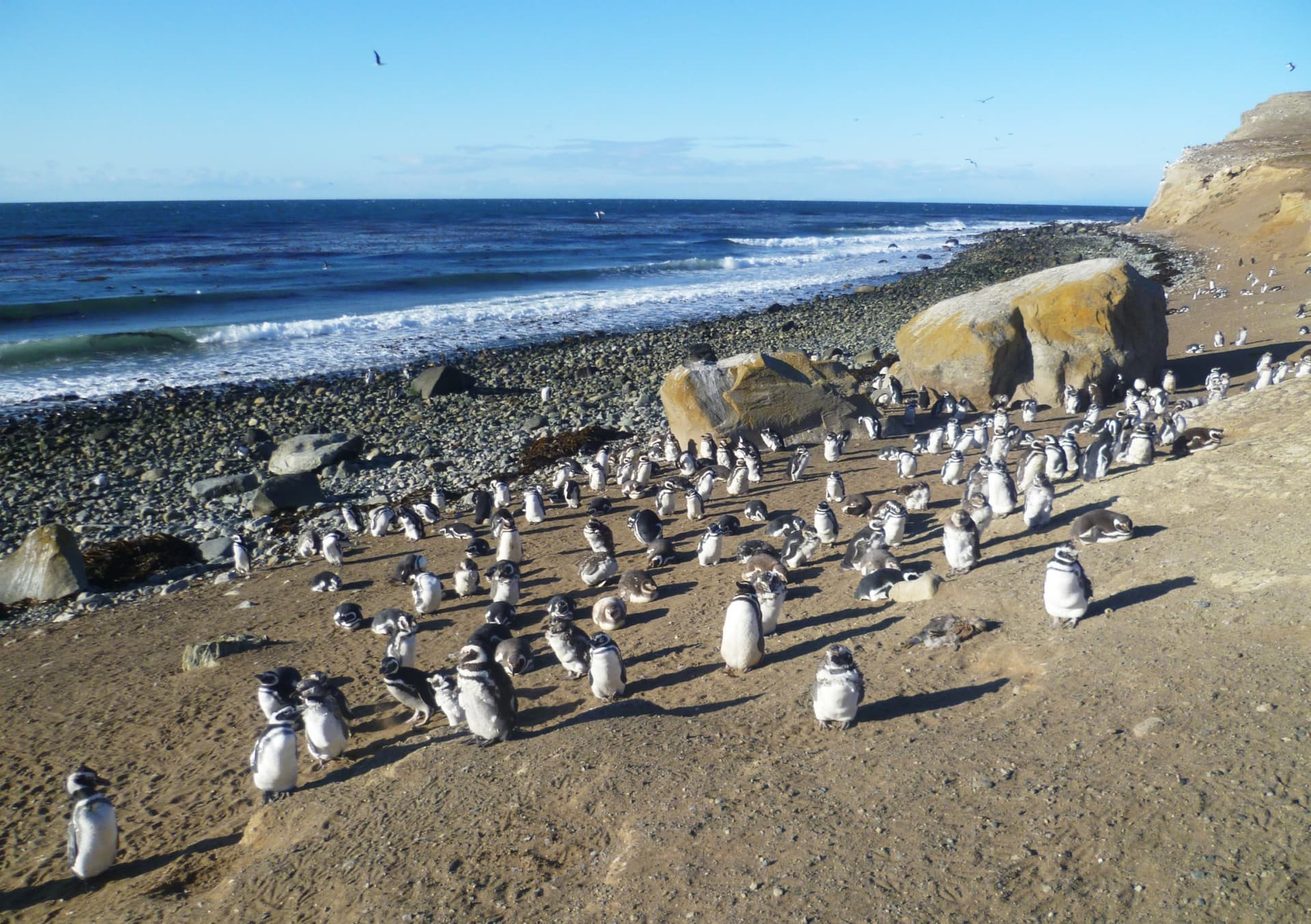
The island concentrates approximately 120,000 Magellanic penguins across a few hectares, making it one of the most accessible observation sites in Chilean Patagonia. The marked trail allows you to walk among the colony, at very close range to the birds, without any special viewing equipment. Crossing the strait adds a maritime dimension to the excursion: depending on conditions, it is possible to spot Chilean dolphins, cormorants, or skuas in flight.
The island is part of what local operators call the "Route to the End of the World," a collection of Patagonian itineraries connecting Punta Arenas to the southern fjords and Tierra del Fuego.
History of the Island
The island was discovered in the early 16th century during the expedition of Ferdinand Magellan, a Portuguese navigator in the service of the Spanish crown. He is the one who gives his name to the strait he crossed, and subsequently to the penguins inhabiting its shores. The colony on Magdalena Island was established through migration from the coasts of Chili and Argentina.
In the mid-20th century, the pressure of industrial fishing in the strait and the exotic bird trade took their toll on the ecosystem. In 1966, the Chili government created the Monumento Natural Los Pinguinos, which encompasses Magdalena Island and the neighboring Marta Island. The site is today monitored by a team of Park Rangers: six during the summer season, three in winter. An old lighthouse, still standing, houses a small exhibition dedicated to the history of the strait and its wildlife.
What to Observe On Site
The Magellanic Penguin Colony
The Magellanic penguin measures 60 to 75 cm in length and weighs 2.7 to 6.5 kg, with males being larger than females. Adults display a white abdomen and black back, while juveniles wear a blue-grey plumage on the chest and back. The species can live up to 25 years and feeds at sea on crustaceans, squid, and cuttlefish.
Observation is done from a marked trail of approximately 800 meters, covered in about one hour. The birds are not aggressive, but visitors are asked not to approach them: a disturbed penguin can stray far from its burrow or group. At the national level, Chili is home to several hundred thousand individuals, with Magdalena Island alone representing one of the densest concentrations.
Other Visible Species
- Cormorants, Dominican gulls, and skuas nesting or flying over the island
- Sea lions on the neighboring Marta Island, often included in the same excursion
- Chilean dolphins in the strait, observable from the ship's deck
When to Visit
Magellanic penguins are present on Magdalena Island from September to March, the breeding and chick-rearing season. Outside this window, the colony returns to the sea and the island loses much of its natural interest: only the lighthouse remains accessible. February is generally considered the most favorable month, as young birds begin to emerge from their burrows and move about on the shoreline.
The climate of the strait is highly changeable. Sun, wind, and rain can follow one another on the same day, sometimes within an hour. A windproof waterproof jacket, closed-toe shoes, and a beanie are essential, even during the southern summer.
How to Get There
The island is only accessible by boat from the maritime terminal in Punta Arenas. Allow approximately two hours for the crossing. Two main options:
- The public ferry Melinka, with a capacity of around 220 passengers, which ensures regular rotations in high season. Departures are infrequent and depend on weather: advance reservation is advised.
- Private boat excursions, faster and often combined with a pass in front of Marta Island to observe sea lions. Some packages include refreshments on board.
Schedules vary by season and sea conditions. Check with local operators or the Punta Arenas tourism office the day before your departure.
Practical Information
- Duration of the excursion: approximately half a day, including 4 hours of round-trip navigation
- Time on the island: approximately one hour, guided by Park Rangers
- Equipment: windproof and waterproof clothing, closed-toe shoes, sun protection, binoculars
- Photography: permitted without flash, at a distance from the birds
- Accessibility: dirt track trail, flat but sometimes muddy; boarding and disembarking on a pontoon
Nearby
The Magdalena excursion easily combines with other stops in Chilean Patagonia. From Punta Arenas, you can reach the Beagle Channel and the Cape Horn region by sea. Further north, the vast Atacama Desert offers a striking contrast with its El Tatio geysers, its Los Flamencos National Reserve, and the Azapa Valley. In the remote Andean far north of Chili, Lauca National Park complements nicely an itinerary blending high altitude and protected wildlife.
Frequently asked questions
Magellanic penguins are present on the island from September to March. February is often considered the optimal month, as chicks begin to emerge from their burrows.
Only by boat from the Punta Arenas terminal. The public ferry Melinka and several private operators operate the crossing, which takes approximately two hours one way.
Approximately one hour of visiting on the island, along an 800-meter marked trail. The full excursion, including navigation, takes about half a day.
A windproof and waterproof jacket, closed-toe shoes, a beanie and gloves even in summer. The climate of the strait changes quickly and wind can be strong.
Plan Your Journey
Magdalena Island fits naturally into a circuit through Chilean Patagonia, often paired with Torres del Paine and Tierra del Fuego. To prepare your itinerary, consult our journeys in Chili.
Interested in this visit?
We can include it in your personalised itinerary.