Lauca National Park
Lauca National Park
UNESCO Biosphere Reserve in the northern Chili altiplano: Pomerape and Parinacota volcanoes, Lake Chungara, over 130 bird species and Inca heritage.
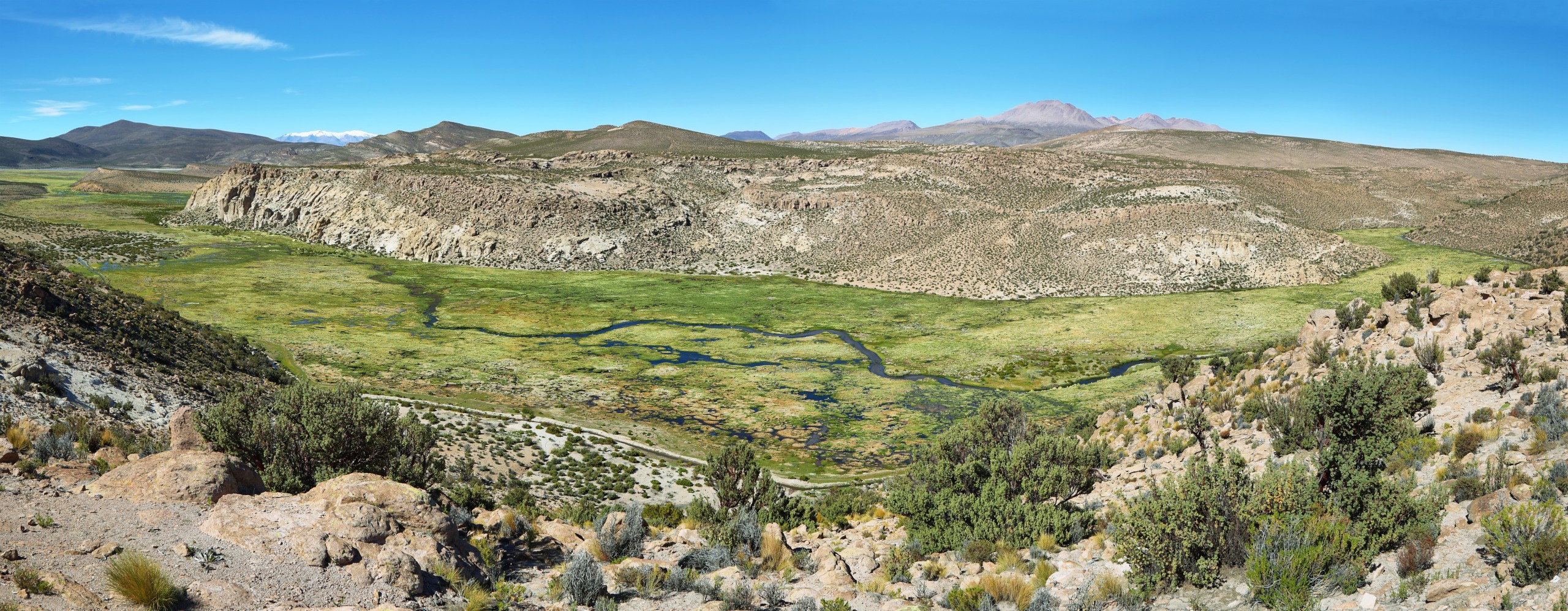
Lauca National Park spans the altiplano of northern Chili, bordering Bolivia, in the Arica and Parinacota region. Its territory combines high-altitude lakes, active volcanoes close to 6,000 meters, wetlands and Inca remains. Recognized as a UNESCO Biosphere Reserve in 1981, it is home to over 130 bird species and emblematic Andean fauna: vicuñas, guanacos, viscachas and pumas.
Why visit Lauca Park
Three elements distinguish this park from other protected areas in Chili. First, its altitude: the majority of the territory lies between 4,200 and 4,700 meters, making it one of the country's highest parks and requiring prior acclimatization. Next, the density of visible wildlife: flamingos, vicuñas and llamas allow close approach around the lakes, without special equipment. Finally, the concentration of heritage: twin volcanoes Pomerape and Parinacota, Lake Chungara, Inca remains and Andean villages are located just kilometers apart, making itineraries dense over one or two days.
History and Inca heritage
The Lauca altiplano has been inhabited for several millennia, but it was the Incas who left the most visible traces. The chaccus, enclosed stone traps, served to gather and then capture wild camelids, particularly vicuñas, for shearing. This technique dates back to the Inca presence in the region, documented from the 13th century. The Las Cuevas chaccu remains one of the best-preserved examples.
The Chungara tambo, a stone structure built in the late colonial period on older foundations, served as a relay station and control post on the route linking the altiplano to the coast. A red ochre-painted rock cave completes the site. The village of Parinacota, within the park, preserves a colonial stone and adobe church, testament to Spanish evangelization grafted onto Andean structures.
The park opened to the public in 1970 to balance tourism and protection of the altiplano ecosystem. Eleven years later, UNESCO integrated it into the Biosphere Reserves network.
What to see in the park
Lake Chungara and Parinacota volcano
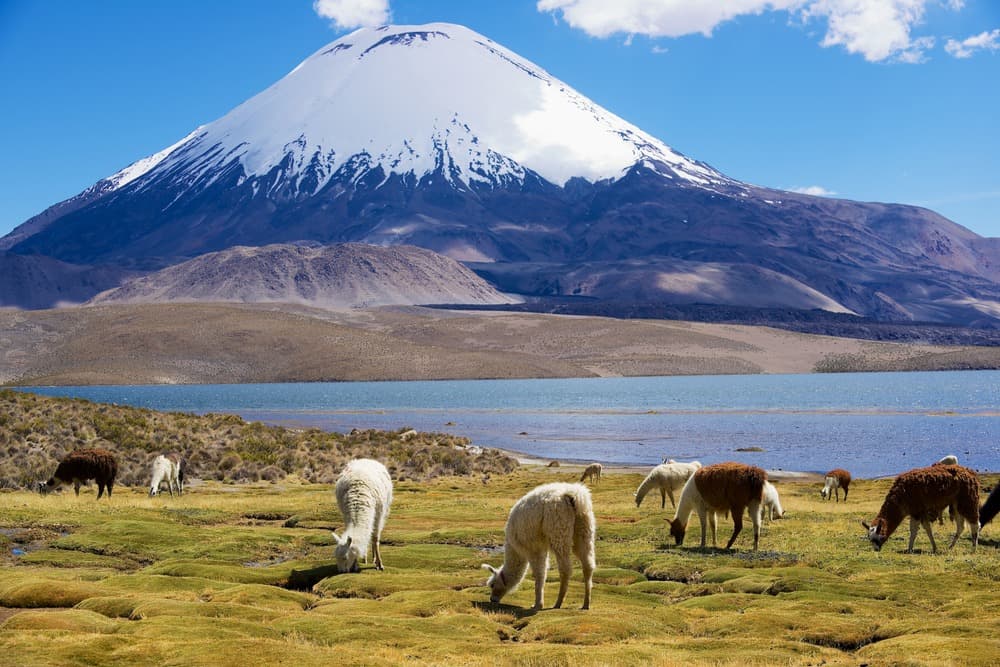
Lake Chungara, at approximately 4,500 meters altitude, ranks among the world's highest lakes. Its emerald-green waters reflect the regular cone of Parinacota volcano, which peaks at nearly 6,000 meters. The shores are equipped with observation platforms and constitute one of the cordillera's best viewpoints for photographing Andean flamingos.
Pomerape and Parinacota volcanoes
These twin volcanoes, among the highest peaks in northern Chili, dominate the park's eastern horizon. Ascending Parinacota requires mountaineering experience and serious acclimatization; most visitors are content to observe them from high-altitude trails.
Fauna of the lakes and puna
Over 130 bird species have been recorded in the park. Among the most visible: Chilean flamingo, Andean gull, Andean avocet, Ridgway's ibis, grebe, Andean tinamou, puna teal, crested duck and giant coot. For mammals, you may encounter pumas (mountain lions), tarucas, viscachas, guinea pigs, armadillos, as well as herds of llamas, vicuñas and guanacos. Vicuñas, protected by law, are sheared two to three times yearly by indigenous herders during traditional ceremonies.
Rivers and wetlands
The park takes its name from the Rio Lauca, whose source lies in Cotaconi lagoon, in the Parinacota region. It crosses the altiplano before joining Lake Coipasa in Bolivia. The Rio Lluta, another major river, descends the western slope of the Andes to flow into the Pacific Ocean. Associated wetlands (bofedales) concentrate the bulk of visible fauna.
When to go
The best period runs from September to December: clear skies, tolerable daytime temperatures and low probability of storms. The first quarter of the year corresponds to Bolivian winter, marked by violent storms and trails sometimes impassable. Whatever the season, the temperature gap between day and night often exceeds 20°C: plan for warm clothing, a windbreaker and enhanced sun protection. Annual rainfall remains modest, around 280 mm.
How to get there
The park is visited from Arica, on the Pacific coast, or from the high-altitude village of Putre, situated at approximately 3,500 meters and used as an acclimatization stop. The international highway CH-11, connecting Arica to La Paz, crosses the park and serves the main points of interest, including Lake Chungara. Allow approximately 4 hours driving from Arica to the lake. Organized excursions typically depart from Arica for the day, but this formula exposes you to acute mountain sickness due to the steep elevation gain (0 to 4,500 m). A night in Putre is strongly recommended.
Practical information
- Altitude: majority of park between 4,200 and 4,700 m. Acclimatization essential, regular hydration, avoid alcohol and strenuous effort in first hours.
- Acute mountain sickness: headaches, nausea and breathlessness are common. A night in Putre before heading to Lake Chungara significantly reduces risk.
- Rangers (CONAF): present at main park posts. Check trail conditions before any hiking and report your itinerary.
- Equipment: warm clothing, gloves, hat, SPF 4 sunglasses, sunscreen, water in quantity, energy snacks.
- Accommodation: limited to Putre village (inns, small hotels) and a basic refuge near Lake Chungara.
- Connectivity: very limited mobile network, plan for offline GPS.
Nearby
Several sites complement a visit to Lauca Park:
- The Las Vicuñas National Reserve, adjacent to the south, welcomes the country's largest vicuña population.
- The Salar de Surire Natural Monument, a salt expanse dotted with lagoons where three flamingo species nest, approximately 2 hours by trail.
- The Azapa Valley, descending back toward Arica, houses Chinchorro mummies among the oldest in the world.
Frequently asked questions
Frequently asked questions
Planning your journey
Lauca Park naturally fits into an itinerary in northern Chili, between Arica, the Atacama Desert and the Bolivian border. To build a coherent stay, consult our trips to Chili or explore other sites such as the Serrano Glacier Viewpoint in Patagonia or the Beagle Channel at the far south.
Interested in this visit?
We can include it in your personalised itinerary.