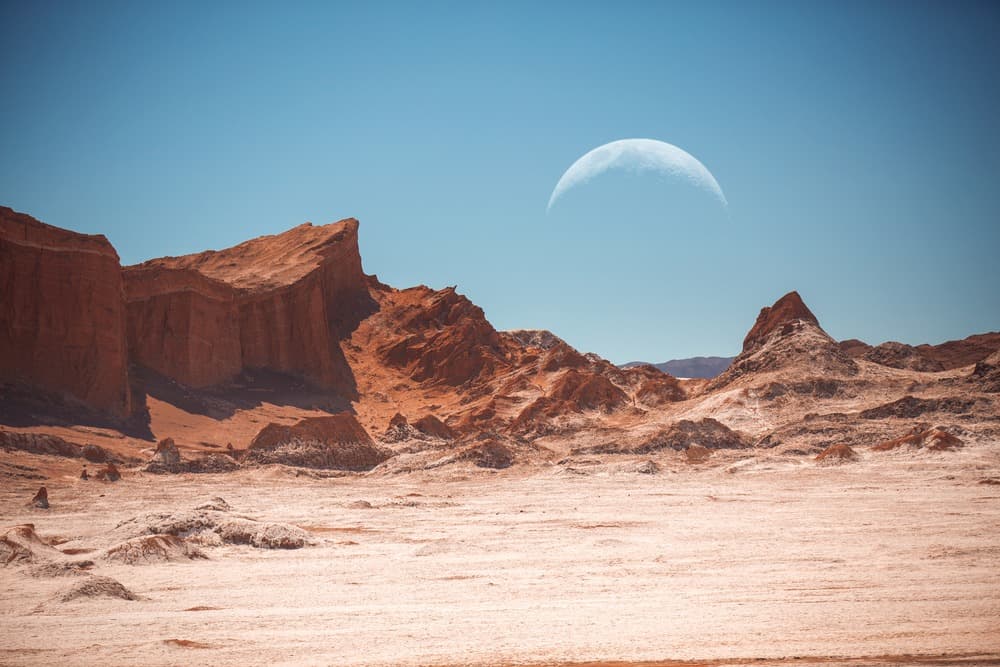
Atacama Desert
Around San Pedro at 2400 m, the world's driest desert unfolds salt flats, geysers at 4320 m, high-altitude lagoons and one of the planet's finest stargazing skies.
The Atacama Desert spans northern Chili between the Pacific Ocean and the Andes cordillera, stretching nearly 1000 km from southern Peru to the Antofagasta region. It is one of the most arid deserts on the planet: certain weather stations in the central depression have recorded no measurable rainfall for decades. Our operational base is San Pedro de Atacama, an adobe village at 2400 m altitude, at the foot of Licancabur volcano (5916 m), roughly 100 km from Calama, where flights from Santiago arrive.
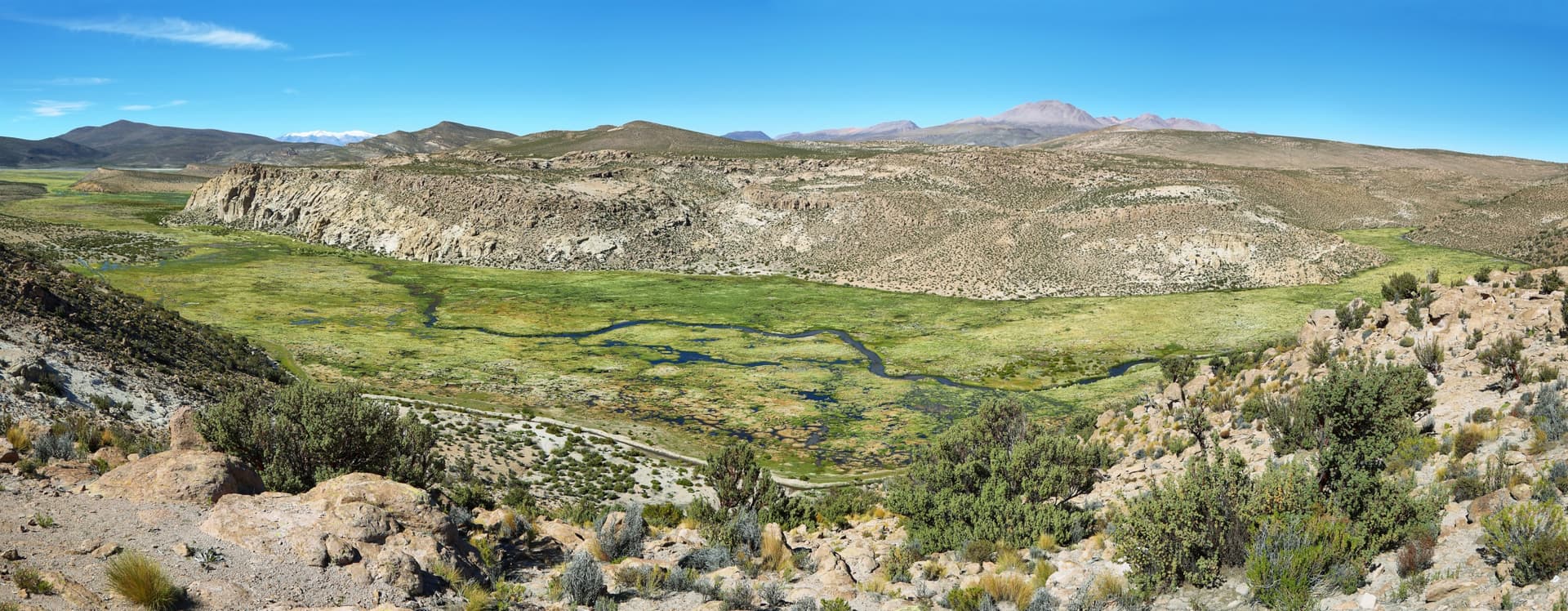
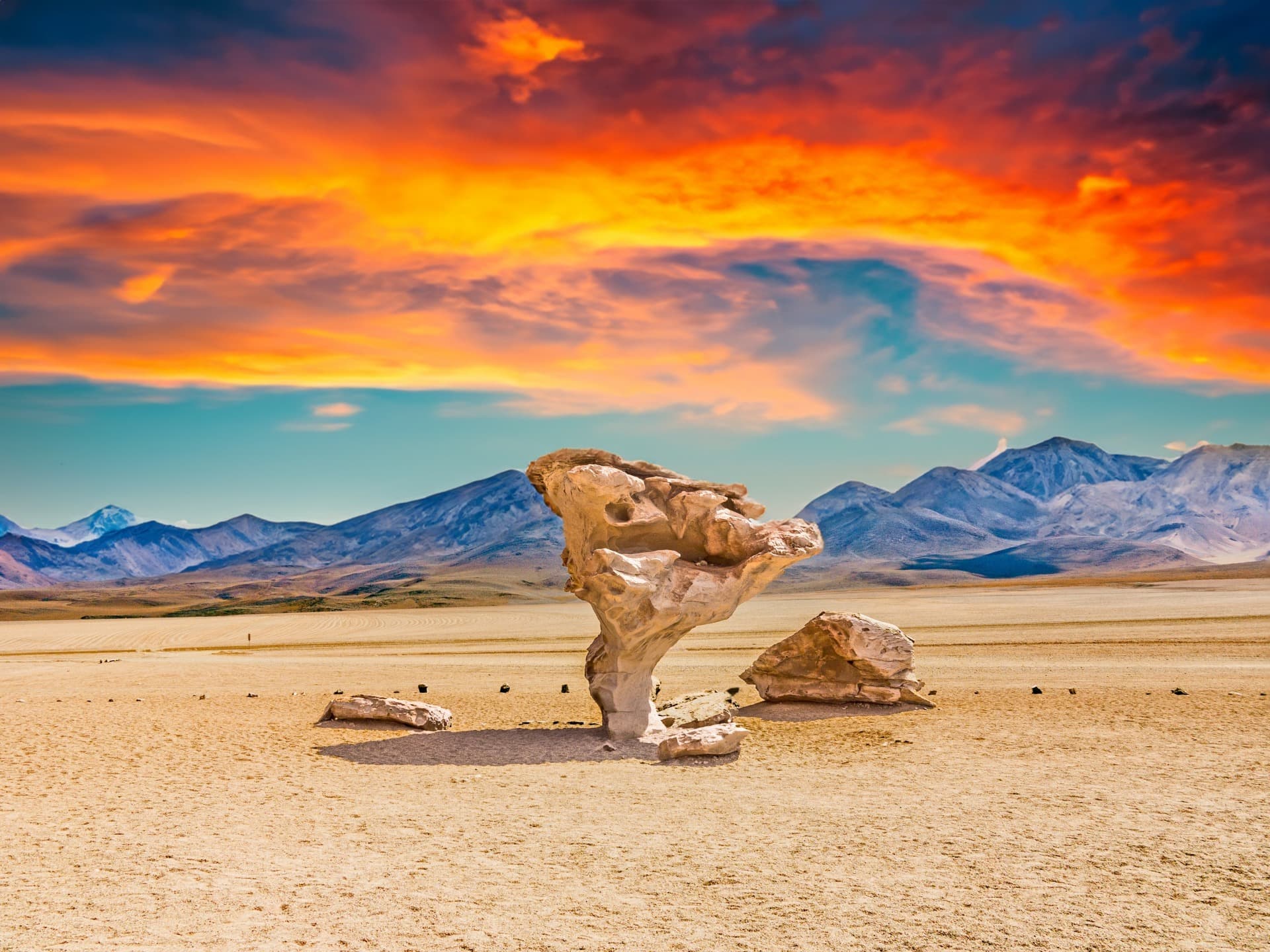
The geography of the area breaks down into three tiers that we explore in loops from San Pedro. Below, the Atacama salt flat, the world's third-largest salt expanse, is home to three flamingo species (Chilean, James, Andean) that we observe at Chaxa lagoon. At intermediate altitude, between 2400 and 3500 m, the sedimentary formations of Moon Valley and Mars Valley sculpt a landscape of salt and clay that we visit in late afternoon for the slanting light. Above 4000 m, the altiplano unfolds its lagoons: Miscanti and Miñiques to the south, Tara further east near the Bolivian border, and the Tatio geothermal field at 4320 m, whose fumaroles peak at sunrise when ground temperature drops to -10°C in June-July.
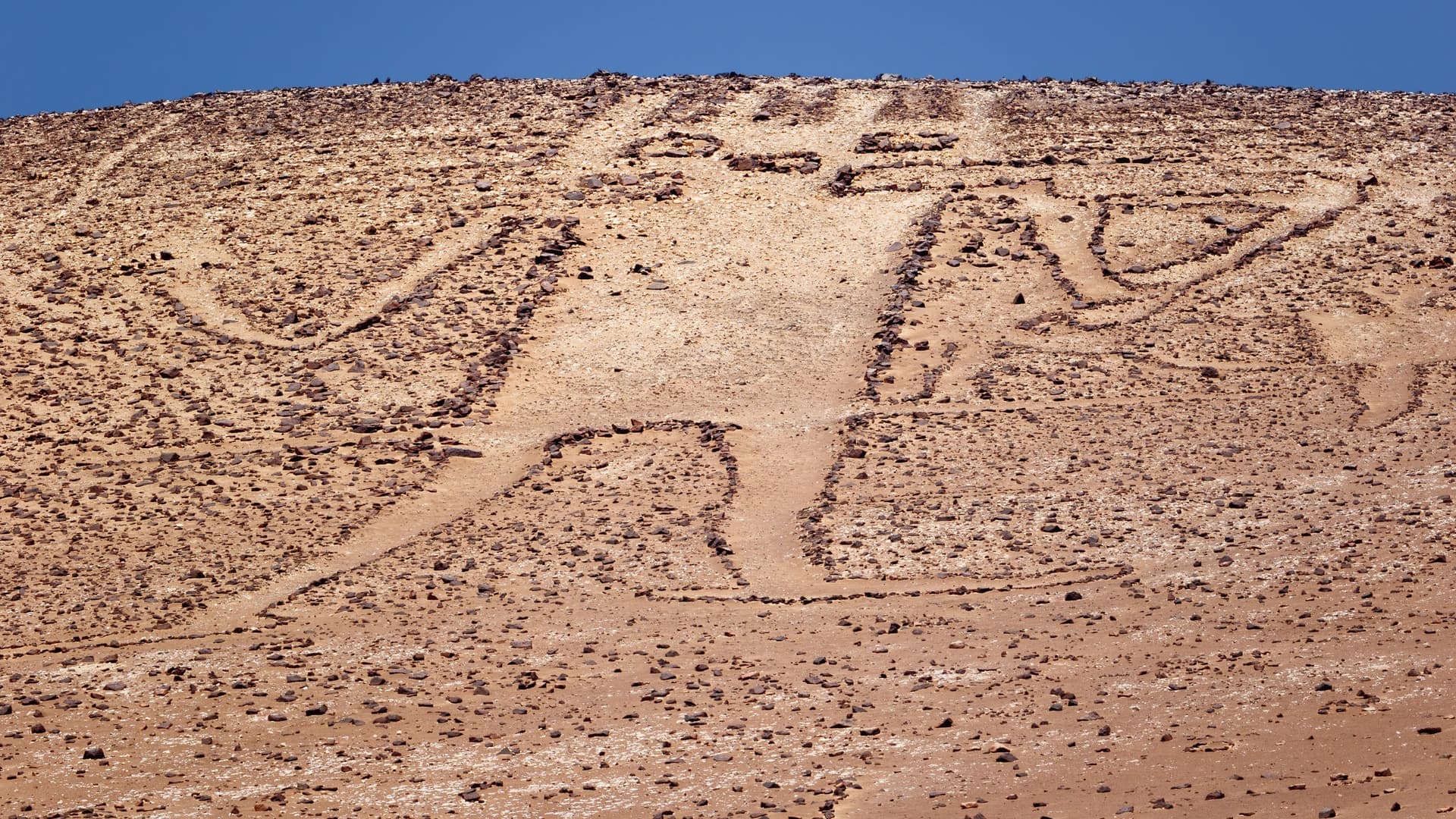
Human occupation of the region dates back 11,000 years. The Atacameño people, or Likan Antay, left behind the pukaras (fortresses) of Quitor and Lasana, and the petroglyphs of Yerbas Buenas. Today, some twenty indigenous communities jointly manage several tourism sites, including Moon Valley and the high-altitude lagoons: entrance fees fund schools and irrigation for Toconao's terraces, a village renowned for its quince crops and constructions in white liparite volcanic stone. Local cuisine revolves around quinoa, llama meat, and rica-rica, an aromatic herb from the altiplano found in infusions or as seasoning.
The regional economy rests primarily on copper (Chuquicamata mine near Calama, one of the world's largest open-pit operations) and, more recently, lithium extraction from the Atacama salt flat, which holds nearly a quarter of global reserves. This industry creates tensions over water resources with farming communities. Tourism, the third pillar, has sustained San Pedro since the 1990s and shapes the majority of our agency's offerings in the country's north.
Another dimension that distinguishes Atacama is astronomy. The combination of altitude, atmospheric dryness (humidity often below 10%) and absence of light pollution makes the desert a premier observation site. ALMA, at 5000 m on the Chajnantor plateau, operates 66 millimetre-wave antennas in an international network: we organize free operations centre tours on Saturday mornings by reservation. Some twenty more modest tourism observatories around San Pedro offer night sessions with 30 to 60 cm telescopes, typically between 9 pm and midnight depending on season.
Highlights
Tatio Geysers at dawn. Departure from San Pedro at 4:30 am to reach the geothermal field at 4320 m around 6:30 am, when thermal contrast causes fumaroles to shoot up 10 m high. Breakfast near a 30°C hot spring.
Miscanti and Miñiques Lagoons. Two high-altitude lakes at 4200 m at the foot of Miñiques volcano, separated by a lava flow. Cobalt-blue waters, vicuñas along the shore and complete silence 90 km south of San Pedro.
Guided stargazing. 2-hour night outing with an English-speaking astronomer at a private site outside the village. Naked-eye identification of southern constellations (Southern Cross, Magellanic Clouds) then telescope observation of Saturn or the Tarantula Nebula depending on season.
Atacama Salt Flat and flamingos. Walk the trails of the Los Flamencos National Reserve, Chaxa sector, where three flamingo species feed in brackish basins. Golden light recommended in late afternoon.
Toconao village and oasis. White liparite stone church from the 18th century, lanes bordered by pomegranate and quince crops, 38 km south of San Pedro. A quiet stop before climbing toward the altiplano.
When to visit
The most stable period spans April to June and September to November. Days reach 20 to 24°C, nights swing between 0 and 8°C in San Pedro, and skies stay clear more than 25 days per month. The austral winter (June-August) offers the best astronomy conditions (dry air, maximum transparency) but early morning geyser outings occur in -8 to -12°C ground temperatures, requiring proper gear.
We recommend avoiding, or planning with flexibility, January and February: this is the high-altitude winter season (invierno boliviano), when altitude storms can render the Tatio, Tara and Miscanti lagoon tracks impassable. Rainfall remains low in volume (20 to 40 mm cumulative) but causes road closures for 24 to 48 hours. These months also coincide with Chilean and Argentine school holidays, bringing heavy crowds to San Pedro and hotel rates inflated 30 to 40%.
Practical advice
Plan for 4 full days minimum on site, ideally 5. The first day is for acclimatization at 2400 m (Santiago-Calama flight of 2 hours, then 1 hour 15 minute road transfer), with a light outing like Moon Valley in late afternoon. Following days alternate demanding excursions (Tatio at 4320 m, lagoons at 4200 m, Tara salt flat at 4800 m) and quieter oasis days to manage altitude. Pushing above 4500 m from day two onward risks headaches and nausea that we prefer to avoid.
Atacama combines naturally with Santiago and the central valley at the start or end of your trip (daily 1 hour 55 minute flights), then with Chilean Patagonia for desert-to-glaciers contrast via Santiago. Pairing with Easter Island is logistically possible but lengthy (flights from Santiago only, 5 hours 30 minutes). San Pedro accommodation ranges from simple posadas to upscale lodges (Tierra, Explora, Awasi) with all-inclusive meals and excursions. The region suits contemplative travellers, astronomy and geology enthusiasts, and families with children aged 8-10 and up capable of handling altitude. Active hikers will find accessible volcano ascents (Toco 5604 m as a day trip, Lascar 5592 m).