Visiting Easter Island: our ultimate guide
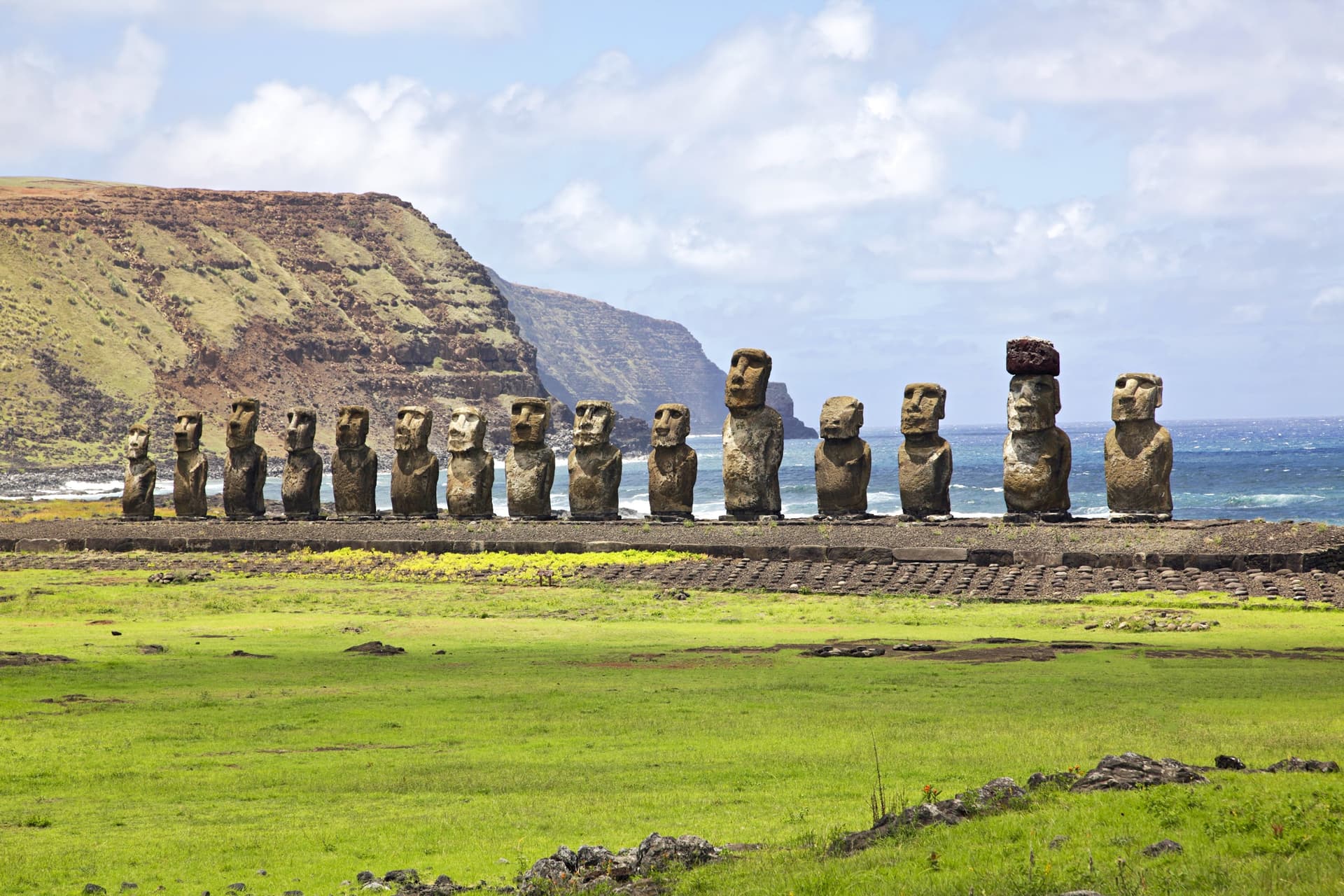
Known by its indigenous name Rapa Nui, Easter Island is considered the most remote island in the world from all inhabited lands. It is also home to the famous Moai, known throughout the world.
Known by its indigenous name Rapa Nui, Easter Island is considered the most remote island in the world from all inhabited lands. It is also home to the famous Moai, known throughout the world.
Are you eager to discover this small corner of land at the end of the world and its cultural and archaeological treasures ? Transportation options, best time to go, number of days to plan for, entrance fees… Discover our practical guide to visiting Easter Island.
How to get to Easter Island ?
Getting to Easter Island by plane
The simplest and fastest way to get to Easter Island is by plane. There are no direct flights from Europe to Mataveri airport on Easter Island.
To reach Easter Island by plane, you have two options:
Fly to Easter Island from Santiago, the capital of Chili
Fly to Easter Island from Papeete (Tahiti) in French Polynesia
It is LATAM Airlines Chile that serves Easter Island from these two destinations. The airline offers daily flights from Santiago and weekly flights from Tahiti. Allow between 5 and 6 hours of flight time for both routes.
Getting to Easter Island by boat
It is also possible to reach Easter Island by boat, but this option proves to be either much more expensive or more complicated and adventurous.
Indeed, it is possible to reach Easter Island by taking a crossing on a private yacht or sailboat. Prices vary depending on services but it will inevitably cost you more than flying. It is also possible to take a cruise off the island.
You can also reach Easter Island by boarding the Aquiles, a vessel of the Chilean Navy, which departs, in principle, twice a year from the city of Valparaiso in Chili. However, the procedures to achieve this are not always easy.
On the one hand, the ship reserves its places as a priority for military personnel, their families, scientists and residents of Easter Island. If there are any remaining spots, they can then be offered to tourists.
On the other hand, you must send a letter to the Chilean Navy (at the following address : Plaza Sotomayor, 592 Naval Post number 3, Valparaiso, Chili) to request permission to stay on the ship and to explain the reasons for your trip to Easter Island.
Finally, the condition for boarding the vessel is to return on the same ship (which means you will not be able to stay as long as you wish) or to present a return airline ticket.
When to visit Easter Island ?
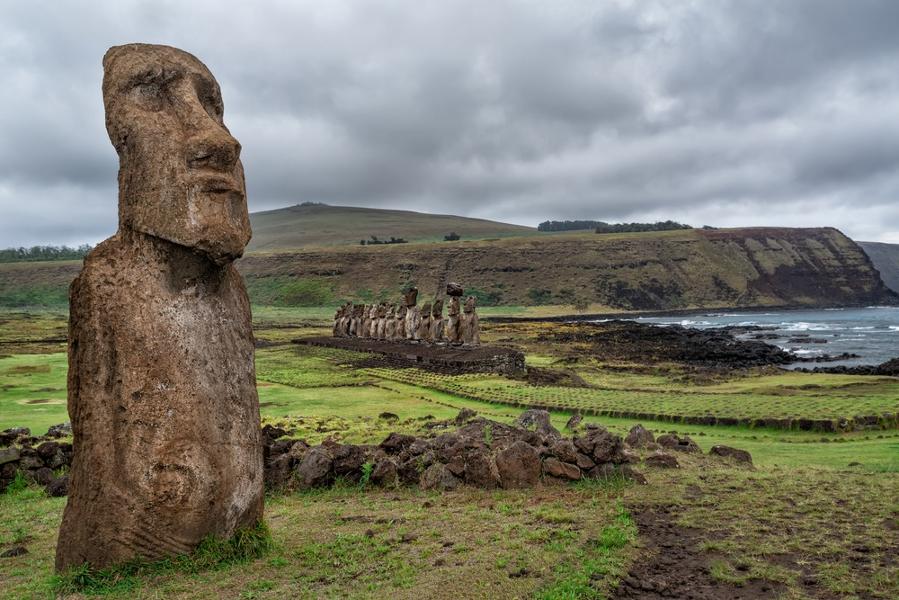
Enjoying a subtropical climate year-round, Easter Island can be visited every month of the year. The high season, however, runs from December to March and corresponds to the Southern Hemisphere summer. December and January are known to be the driest and warmest months. From May to September, temperatures are milder. Although showers can occur at any time of year, rainfall is more frequent during May and June.
To sum up, if you want to enjoy high temperatures, prefer the tourist season (December to March). Moreover, if you want to attend the famous Tapati Rapa Nui festival, head there during the first fifteen days of February. If you prefer to avoid crowds and visit Easter Island with fewer tourists, you can schedule your trip in April/May or November/December.
How much time should you plan to visit Easter Island?
Generally speaking, you need at least 3 days on the island to have time to visit the must-see sites of Easter Island such as the famous moai. If you want to combine cultural visits, hiking on foot or by bike and swimming at a leisurely pace, plan for at least 5 days, or even a week. This is the minimum to soak up the atmosphere of the places and meet the locals.
Where and how to buy the Boleto, the mandatory ticket to visit the sites?
To visit the cultural and archaeological sites of Easter Island, you must obtain the Boleto. It is an entrance ticket implemented with the objective of preserving and protecting Rapa Nui National Park, listed as a UNESCO World Heritage site since 1995.
The Boleto costs $80 per adult (and half that for children). It is valid for 10 days from the date of entry. You must keep it with you at all times to access the sites without paying on-site. All sites can be visited multiple times except for two sites (the ceremonial village and center of Orongo and Rano Raraku volcano) which can only be visited once.
To obtain the Boleto, the simplest way is to buy it online on the official Rapa Nui National Park website.
How to get around Easter Island?

Here are the different modes of transport to get around Easter Island:
On foot : it is easy to get around on foot to visit Easter Island. Numerous hiking trails also allow you to discover the landscapes and cultural treasures of the island.
By bike : many visitors turn to biking to visit Easter Island. It must be said, it is easy and inexpensive to rent a bike on the island. You can even find electric bikes.
On horseback : it is possible to go horseback riding to visit Easter Island. These can be half-day, full-day or multi-day outings. Among the most popular horseback excursions, you can mention the one that will allow you to reach the summit of Maunga Terevaka, the highest point on the island.
By shuttle bus : the company Te Ao Tour recently launched a shuttle service that connects Hanga Roa to Anakena Beach. The route serves several stops in town. Prices are very affordable.
By taxi : it is possible to get around Easter Island by taxi, although it is one of the most expensive modes of transport.
By two-wheeler : you will find numerous scooter and motorcycle rental companies on Easter Island. In both cases, you will be asked for an international motorcycle license.
By car : it is possible to rent a car to visit Easter Island. Note that rental vehicles are not insured and you will have to pay all costs in case of damage.
Do you need a guide to visit the archaeological sites of Easter Island?
It is mandatory to be accompanied by an accredited local guide to visit the sites of Rapa Nui National Park. Only two sites are exempt from this requirement: Tahai and the Haƞa Rau beach resort (note that Anakena Beach located in the area still requires the presence of a guide).
This measure was implemented in March 2018 by the indigenous community Ma'u Henua, which is responsible for administering the national park, in order to preserve and protect local heritage and ecosystems.
You will find, on the official Rapa Nui National Park website, all accredited guides and tour operators. You can also make a request to your local Chili travel agency, which will organize all your visits and provide you with an approved guide. Contact us!
Florine Dergelet
Florine Dergelet
A web writer for over 10 years, Florine Dergelet is a traveler driven by the desire to discover the world with an open heart. Each of her articles is an invitation to slow down, to listen, to understand. Because for her, traveling is not about checking countries off a map, but about weaving bonds (often invisible but always powerful) with places, peoples and all sorts of creatures in the animal kingdom. Her motto? Advise travelers ethically, raise their awareness about animal welfare, respect for cultures, and the importance of humble and sustainable tourism. Because the most beautiful memories are often born far from the spotlight, in the shadow of a trail, during a conversation, or in the quiet whisper of a world we finally take the time to listen to…
