Stargazing in Chili: Where to See the Stars?
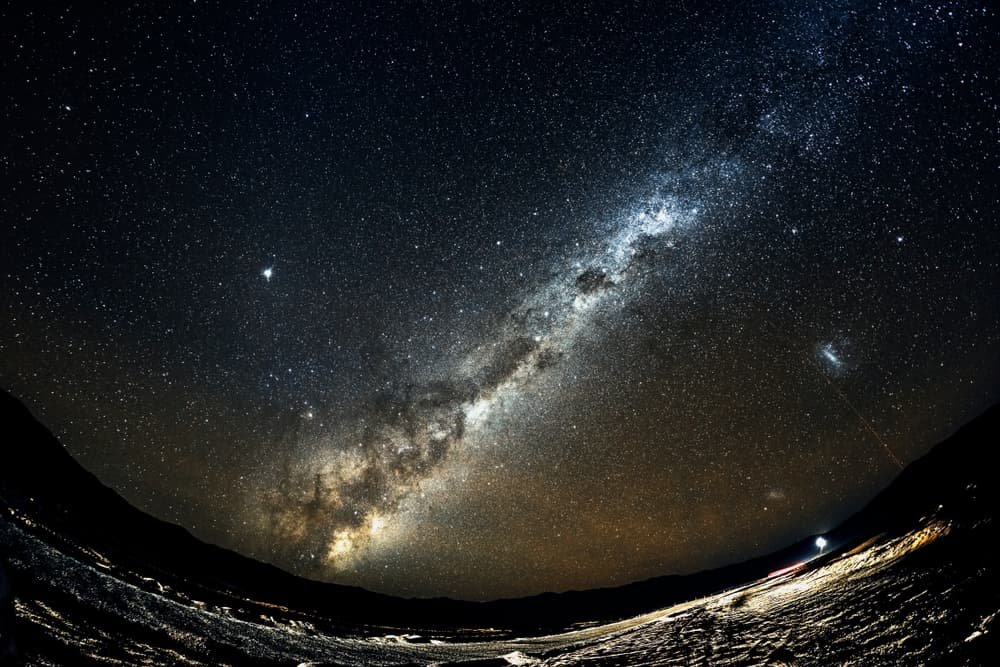
With vast desert expanses, Chili is largely free from the light pollution of major cities… The result? The country boasts a night sky perfectly suited to astro-tourism!
With vast desert expanses, Chili is largely free from the light pollution of major cities… The result? The country boasts a night sky perfectly suited to astro-tourism! From the Atacama Desert to Vicuña: here are the must-see observation spots for stargazing in Chili.
The Atacama Desert, THE spot for stargazing in Chili
Thanks to its climate, geographical location, and high altitude (between 2,000 and 5,000 m), the Atacama Desert is an extraordinary site for observing the stars. Indeed, numerous observatories dot its arid landscape…
The ALMA Observatory
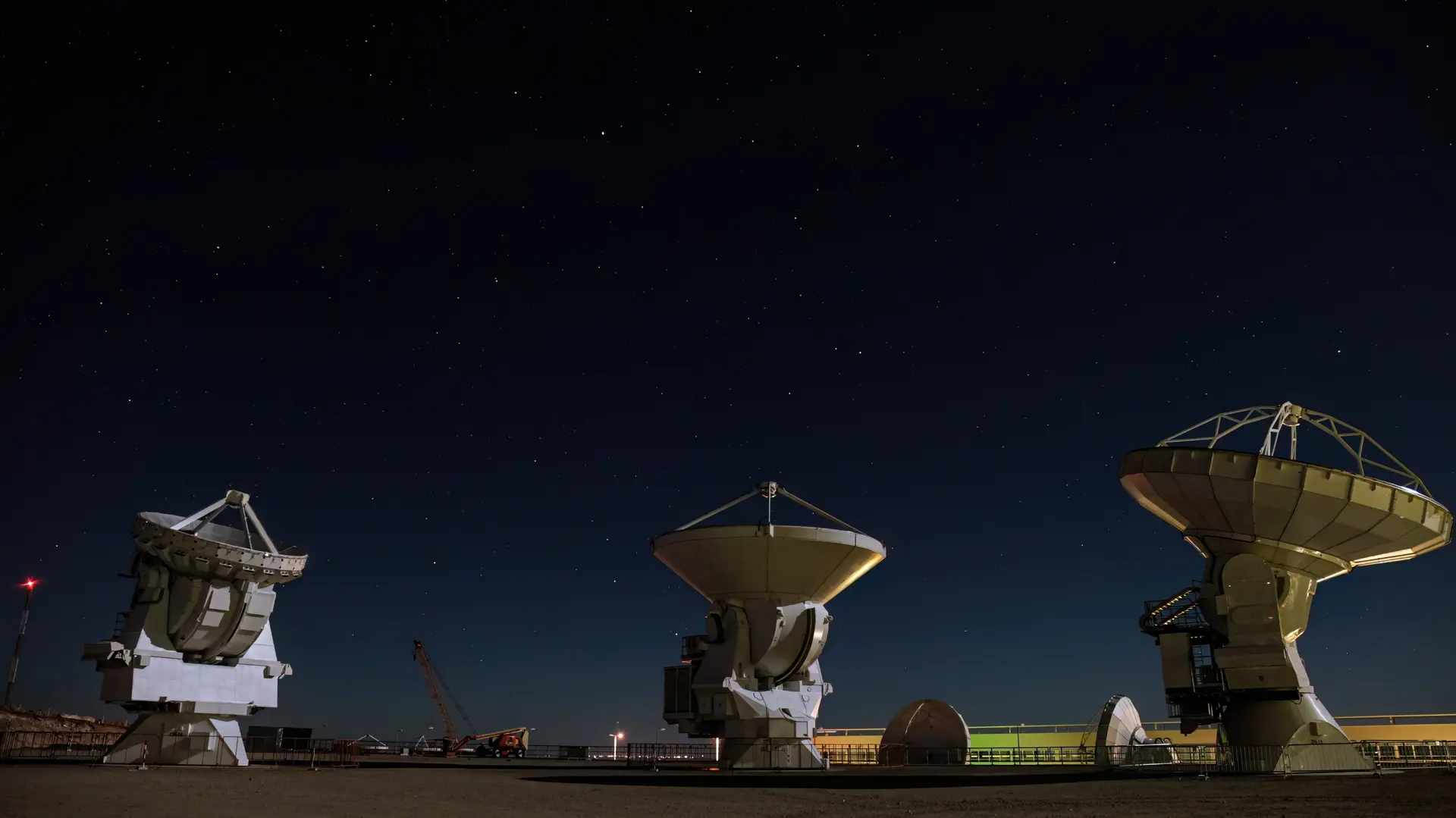
About thirty kilometers south of San Pedro de Atacama, you'll find the Atacama Large Millimeter Array (ALMA). Co-directed by several countries (including France), this astronomy center is one of the most important in the world. Standing at 5,000 meters altitude, the observatory boasts 66 antennas!
Thanks to its cutting-edge technology, ALMA can observe micro-details previously undetectable. To visit the site? Head to the Alma Operation Support Facility (OSF), located at 2,900 m (where the control room is situated).
Planning your visit Accessible by bus from San Pedro, the site is off-limits to children under 4 years old. Capacity is limited and visits are organized to avoid disrupting staff. To visit? Register on the observatory's official website: https://www.almaobservatory.org/en/home/ |
The Space OBS Observatory
Founded in 2002 by French astronomer Alain Maury, the San Pedro de Atacama Celestial Explorations (SPACE OBS) observatory is located just a few kilometers from the center of the eponymous city. Here you'll learn to distinguish the movements of the moon and certain planets, as well as recognize different stars, thanks to a dozen telescopes available to the public…
Planning your visit The site is accessible by bus from San Pedro. Capacity is limited to 24 people. To ensure you have a spot, be sure to book on the observatory's official website: www.spaceobs.com The visit is geared toward the general public. For more experienced astro-tourists, it's possible to arrange a more specialized tour with more specific equipment. |
The Alto Atacama Desert Lodge & Spa Observatory
An unusual observation spot? The Atacama Desert Lodge & Spa! Hidden within this luxury hotel (nestled in the heights of San Pedro de Atacama) is an open-air observatory! Free for hotel guests, this spot offers a 360-degree view of the Milky Way – from your lounge chair or telescope – alongside an expert guide.
Planning your visit If you're not a hotel guest, contact the establishment to reserve your visit. |
The Cerro Paranal Observatory
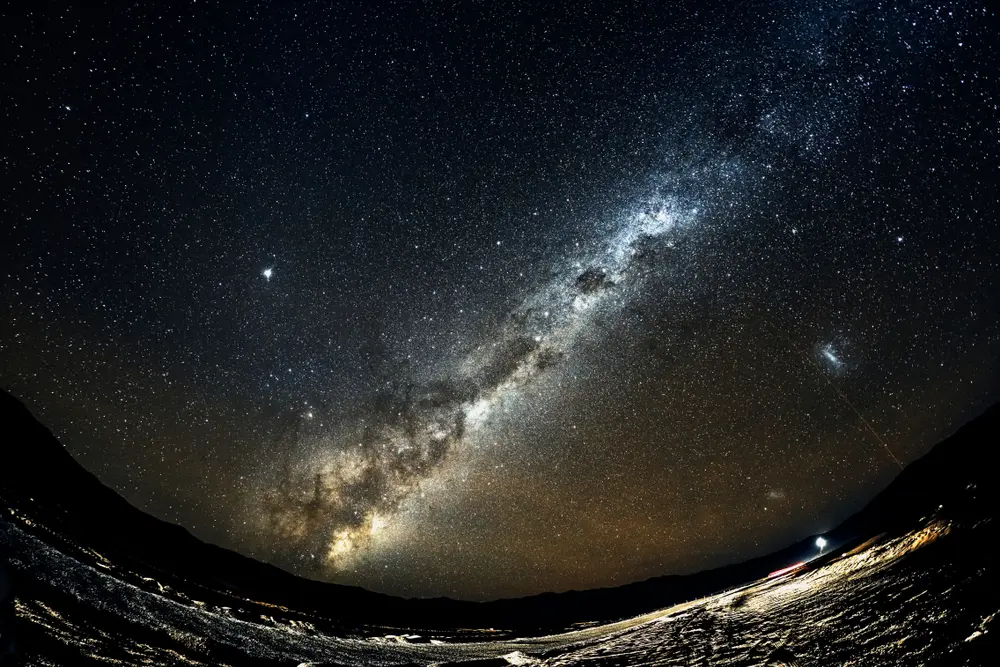
At 2,635 m altitude south of the city of Antofagasta, you'll find the Observatorio Paranal. Renowned for its VLT (Very Large Telescope), this observatory specializes in the study of black holes and galaxy formation. It is operated by The European Southern Observatory (ESO) – an intergovernmental organization founded in 1962, which enables "scientists from around the world to unlock the secrets of the Universe."
Planning your visit Visits are organized every Saturday at 10 a.m. and 2 p.m. To book, visit the ESO's official website: https://www.eso.org/public/weekend-visits/weekend-visits-paranal/ |
The Cruz del Sur Observatory
Planning to pass through Limarí province? Stop in the town of Combarbalá, which is home to South America's largest astro-tourism observatory!
Located 10 minutes by car from downtown Combarbalá, the Observatorio Cruz del Sur features four observation domes (whose arrangement represents the "Southern Cross constellation" – the smallest constellation in the southern hemisphere).
In addition to its numerous telescopes, the observatory is equipped with projection rooms and an amphitheater where conferences and concerts are regularly held. The observatory's specialty? Its nighttime visits!
Planning your visit Visits are offered Monday through Sunday: 10 a.m. to 2 p.m. and 4 p.m. to 8 p.m. Ticket sales are exclusively at No. 12 Plaza de Armas, in downtown Combarbalá. Observatory's official website: https://www.observatoriocruzdelsur.cl/ |
The Cerro Mamalluca Observatory
Funded by the municipality of Vicuña (located in the Elqui region), the Cerro Mamalluca observatory opened its doors in 1998, making it one of the country's oldest observatories. Focused on education, this astro-tourism site is particularly suited to beginners and perfect for admiring the night sky of the southern hemisphere!
During your visit? You'll be guided by informative presentations and can marvel at the cosmos with telescopes or from the observation dome.
Planning your visit You can reach the site with your own vehicle or by public transport. Visit tickets must be reserved via the observatory's website: https://www.observatoriomamalluca.com/ |
The Cerro Tololo Inter-American Observatory
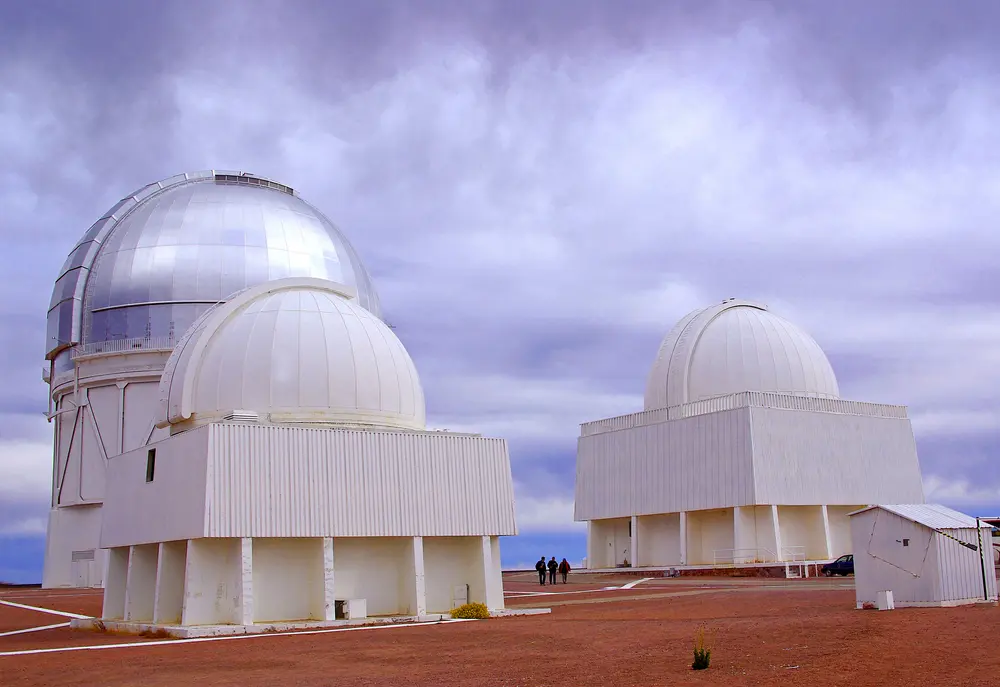
Also located in Vicuña, the Observatorio Astronómico Cerro Tololo (CTIO) stands at 2,207 m altitude. This scientific complex is a program of NOIRLab (National Optical-Infrared Astronomy Research Laboratory)...
It's an American laboratory dedicated to ground-based optical and infrared nighttime astronomy. The site is renowned for its 4-meter Blanco telescope, as well as for its research on the Large Magellanic Cloud – a small galaxy composed of billions of stars.
Planning your visit The observatory is open to the public on Saturdays and Sundays, but spaces are limited. Reservations are required on NOIRLab's official website: https://noirlab.edu/public/visits/cerro-tololo-chile/ |
The Observatorio del Pangue
https://www.voyagechili.fr/guide-chili/destination/santiago
Still in Vicuña (located 550 km north of Santiago) you'll find the Observatorio del Pangue, designed and directed by French astronomer Éric Escalera. Situated at 1,500 m altitude, this site offers different types of "programs" – group or private visits, with or without transport included, etc. Among these offerings? The "E Plus program" allows you to observe the night sky over 2, 3, or 4 consecutive nights!
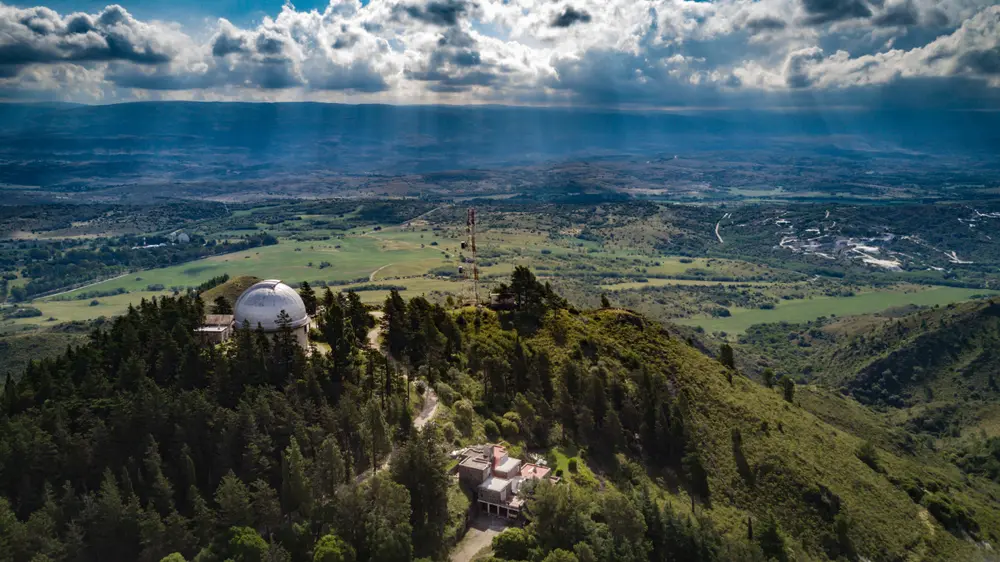
Planning your visit The observatory is closed from mid-June to late August (during the southern winter) and during full moon periods. Reservations are required on the website: http://odp-f.blogspot.com/2017/04/2.html |
For successful astro-tourism…
1. Avoid June-July when temperatures are low and rainfall risk is high.
2. Consult the lunar calendar (to avoid full moon periods, which aren't ideal for stargazing).
3. Choose remote areas, far from light pollution of major cities.
4. Prioritize guided visits, to benefit from an expert's knowledge!
Frequently asked questions
The best period for stargazing in Chili is between March and May, and between September and November. Avoid June and July (southern winter, risk of rain) as well as full moon nights, which aren't conducive to observation. The Atacama Desert enjoys clear skies on more than 300 nights per year.
Yes, booking is highly recommended, sometimes mandatory, for most Chilian observatories. Sites like ALMA, Cerro Tololo, and Cerro Paranal have limited capacity. Book directly on each observatory's official website, ideally several weeks in advance during peak season.
The Cerro Mamalluca observatory in Vicuña is ideal for beginners: focused on education, it offers guided tours with informative presentations and access to telescopes. The Space OBS observatory in San Pedro de Atacama is also open to the general public and features a dozen telescopes accessible to all.
Yes! Thanks to minimal light pollution in the Atacama Desert and its high altitude (between 2,000 and 5,000 m), the Milky Way is visible to the naked eye on moonless nights. The southern hemisphere offers a spectacular view of the galactic center, far more brilliant than what can be observed from Europe.
It depends on the observatory. The ALMA observatory, for example, is off-limits to children under 4 years old. Conversely, sites like Cerro Mamalluca or Cruz del Sur offer family-friendly visits. Check directly with each site before planning your visit.